
If you’ve been exploring cannabinoids beyond THC and CBD, you’ve probably stumbled across CBC and wondered what sets it apart from the crowd. I remember having the same question back when I first encountered it on a product label, sandwiched between familiar names and one I’d never heard of before.
CBC, or cannabichryomene, is one of the six major cannabinoids produced by cannabis plants, yet it remains surprisingly under the radar compared to its famous siblings. Unlike THC, it won’t get you high. Unlike CBD, it hasn’t flooded the wellness market with products. But here’s what caught my attention: research suggests CBC might offer unique benefits that complement other cannabinoids through something called the entourage effect.
The science behind CBC is genuinely fascinating. This non-intoxicating compound interacts with your body’s endocannabinoid system differently than CBD or THC, binding primarily to receptors involved in pain perception and inflammation. Early studies point to potential benefits for mood support, neurological health, and skin conditions, though we’re still in the research phase for most applications.
What makes CBC particularly interesting in 2026 is how it’s starting to appear in full-spectrum and broad-spectrum products. Many manufacturers now highlight CBC content alongside CBD and other minor cannabinoids like Understanding CBN recognizing that these compounds work better together than in isolation.
Whether you’re completely new to cannabinoids or you’ve been using CBD products for years, understanding CBC gives you better insight into what you’re actually consuming. This guide breaks down everything from basic chemistry to practical shopping tips, helping you make informed decisions about products containing this intriguing compound.
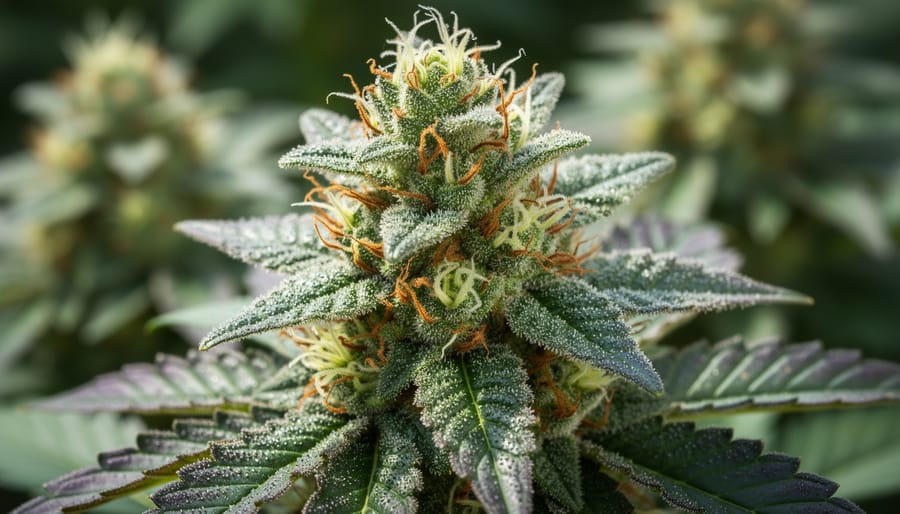
What Exactly Is CBC (Cannabichromene)?
Cannabichromene, or CBC for short, is a naturally occurring compound found in cannabis plants. Like CBD and THC, it starts life as CBGA (cannabigerolic acid), the mother molecule that eventually transforms into the various cannabinoids we know today. As the plant matures, enzymes convert CBGA into different acidic forms, one of which becomes CBC.
What sets CBC apart is its classification as a minor cannabinoid. Health Canada groups it this way because it typically appears in much smaller concentrations than the heavy hitters like THC and CBD. You won’t find cannabis strains advertising high CBC percentages the way they do with THC or CBD content. It’s there, quietly doing its thing in the background, but in amounts that make it harder to study and commercialize.
Here’s the crucial bit: CBC won’t get you high. It belongs to the non-psychotropic family of cannabinoids, meaning it can’t alter your mental state the way THC does. This happens because CBC doesn’t bind to the CB1 receptors in your brain, the same receptors responsible for THC’s intoxicating effects. Think of it like a key that simply doesn’t fit that particular lock.
So why haven’t most people heard of CBC until recently? A few reasons. First, the cannabis conversation has been dominated by THC and CBD for years, leaving little room for the minor players. Second, extracting and isolating CBC in meaningful amounts presents technical challenges that researchers and manufacturers are only now starting to tackle. Third, the science itself is still catching up. While we’ve studied THC and CBD extensively, CBC research remains in earlier stages, with most investigations focused on understanding what it does rather than how to maximize its presence in consumer products.
How CBC Differs From CBD, THC, and CBN
If you’re trying to make sense of the cannabinoid alphabet soup, you’re not alone. CBC, CBD, CBN, THC, they all come from the same cannabis plant, but they work differently once they’re in your system.
The biggest thing to understand about CBC is that it’s non-psychotropic, meaning it cannot alter your mental state. This puts it in the same category as CBD rather than THC. Unlike THC, which binds to CB1 receptors in your brain and creates that characteristic high, CBC takes a completely different route. It doesn’t latch onto those CB1 receptors at all, which is part of Why CBD won’t get you high either.
Here’s a quick breakdown of how these cannabinoids stack up:
| Cannabinoid | Psychoactive | Primary Focus | CB1 Receptor Binding |
|---|---|---|---|
| CBC | No | Inflammation, soreness, tension relief | Does not bind |
| CBD | No | Calm, balance, discomfort relief | Minimal binding |
| CBN | Mildly | Sleep support, relaxation | Weak binding |
| THC | Yes | Euphoria, altered perception | Strong binding |
CBC and CBD share some similarities beyond their non-intoxicating nature. Both are naturally occurring phytocannabinoids, and research suggests they both reduce inflammation, support brain function, and influence immune health. What sets CBC apart is its mechanism, while CBD interacts minimally with CB1 receptors, CBC sidesteps them entirely, working through different pathways in your endocannabinoid system.
CBN sits somewhere in between. It’s mildly psychoactive, though nowhere near THC levels, and it’s actually what THC breaks down into over time. That’s why older cannabis products sometimes feel more sedating, there’s more CBN present.
What this means practically is that you can use CBC-containing products without worrying about impairment. No foggy thinking, no altered state, no need to plan your day around when you take it. It’s wellness-focused rather than experience-focused, if that makes sense. I’ve tried full-spectrum products with CBC alongside CBD, and there’s definitely no head change, just the potential for the benefits without the buzz.
The fact that CBC doesn’t bind to CB1 receptors is actually what makes it appealing to researchers studying its potential for relieving tension and alleviating soreness. It’s working through different channels than the cannabinoids most people know about, which opens up interesting possibilities for targeted wellness support.
What Research Says About CBC’s Potential Benefits
Here’s what we know about CBC from current research, and I’ll be straight with you: we’re in early days, but the findings so far are genuinely interesting.
Studies have explored CBC’s potential in several areas. Research indicates it may help with relieving tension and alleviating soreness, which caught my attention when I first looked into minor cannabinoids for managing post-workout discomfort. Scientists have also examined CBC’s anti-inflammatory properties, finding that both CBC and CBD appear to reduce inflammation through similar pathways, though they work differently at the receptor level.
Brain health is another area where CBC shows promise. Preliminary research suggests it may support brain function, particularly in relation to neural stem progenitor cells, which are important for ongoing brain health. This doesn’t mean CBC is a brain-boosting miracle, but it points to potential mechanisms worth understanding better.
The immune health angle is equally intriguing. CBC appears to influence immune responses, working alongside other cannabinoids to create what researchers call the entourage effect. That’s one reason many people in the CBD community gravitate toward full-spectrum products that include CBC rather than isolates.
Here’s the crucial caveat: most CBC research to date involves lab studies and animal models. Human clinical trials are limited, and we’re not at the point where anyone can make definitive medical claims. Health Canada classifies CBC as a minor cannabinoid, recognizing its presence but also its less-studied status compared to CBD or THC.
What excites me about these findings isn’t that CBC is a cure-all. It’s that this non-psychotropic cannabinoid shows distinct mechanisms that complement what we already know about CBD and other compounds. As someone who’s watched the CBD space mature over the past few years, I see CBC research following a similar trajectory: early promise, growing interest, and a need for rigorous human studies to confirm what lab work suggests.
The takeaway? CBC deserves attention, but approach any product claims with healthy skepticism until the research catches up.

How CBC Works in Your Body
Your body has a built-in system called the endocannabinoid system, which helps regulate everything from mood to inflammation. Think of it as an internal network with receptors scattered throughout your brain and body. Most cannabinoids interact with this system by binding directly to these receptors, but CBC takes a different approach.
Unlike THC, which latches onto CB1 receptors in your brain and creates that familiar high, CBC doesn’t bind to CB1 receptors at all. This is exactly why it can’t alter your mental state, no matter how much you take. Instead, CBC works more like a behind-the-scenes player. It influences other receptors and pathways in your body without directly occupying the main cannabinoid receptor sites.
Here’s where it gets interesting. CBC appears to interact with receptors involved in pain perception and inflammation, particularly TRPV1 and TRPA1 receptors. These are the same receptors that respond to heat and certain chemicals, which is why researchers think CBC might help with soreness and tension without the psychoactive effects.
CBC also seems to boost your body’s own endocannabinoids, the ones you naturally produce. Rather than replacing them or directly activating receptors, it helps your existing system work more efficiently. It’s a bit like having a good assistant who makes everyone else’s job easier rather than doing all the work themselves.
This unique mechanism means CBC can potentially deliver wellness benefits while keeping your head completely clear. You’re getting the potential therapeutic effects without any impairment, which is a major reason people are getting excited about it in 2026.
Finding CBC Products in 2026
Here’s the honest truth I’ve learned after spending months exploring CBC options: finding dedicated CBC products in 2026 isn’t as straightforward as walking into a dispensary and picking from dozens of choices.
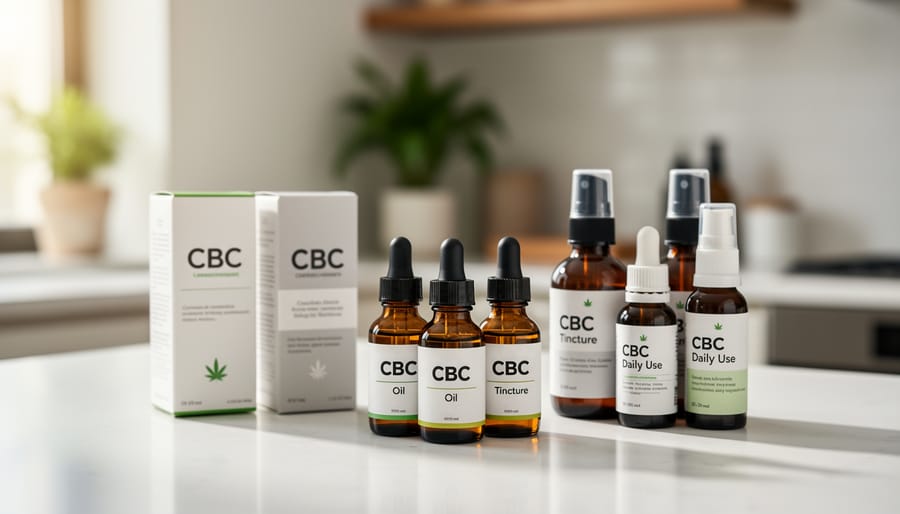
Most CBC you’ll encounter comes tucked inside full-spectrum products rather than as a standalone cannabinoid. Full-spectrum oils, vapes, and gummies typically contain CBC alongside CBD, trace THC, and other minor cannabinoids. When I compare CBC oils vs CBD oils I usually find that what’s marketed as “CBD oil” is actually full-spectrum and includes some CBC, just in smaller amounts.
Pure CBC isolates exist but remain harder to source than CBD or CBN products. Specialty online retailers focusing on cannabinoid research and wellness tend to carry them, though availability fluctuates. I’ve found that looking at lab certificates of analysis tells you exactly how much CBC you’re getting, which matters because concentrations vary wildly between brands.
The most common forms are tinctures and oils, which let you control dosing precisely. Vapes come next, particularly for those already familiar with vaping weed guide basics who want faster onset. Gummies and capsules appear less frequently in CBC-specific formulations.
Label literacy makes all the difference. Look for products that list cannabinoid percentages clearly, provide third-party lab testing, and specify whether they’re full-spectrum, broad-spectrum, or isolate. My approach has been to start with full-spectrum products from trusted CBD brands, which naturally contain CBC, before seeking out CBC-focused options.
The landscape is evolving quickly. What wasn’t available six months ago sometimes appears without fanfare, so checking back with reputable suppliers pays off. Join online communities where people share their finds, because word-of-mouth still beats marketing claims when hunting for quality CBC products.
Safety and What to Know Before Trying CBC
CBC’s non-psychotropic nature means you won’t experience the high associated with THC, which makes it appealing for those exploring cannabinoids without intoxication. That said, “safe” doesn’t mean you should skip doing your homework before trying any new supplement.
Start low and go slow. Even though CBC won’t alter your mental state, everyone’s body responds differently to cannabinoids. I recommend beginning with the smallest dose available and gradually increasing only if needed. Keep a simple journal noting the product you tried, the dose, and how you felt, this record becomes invaluable when figuring out what works for you.
Quality sourcing matters more than ever with minor cannabinoids like CBC. Since regulation varies and the market’s still developing in 2026, look for products with third-party lab testing that confirms cannabinoid content and screens for contaminants. Certificate of Analysis documents should be readily available, either on the package or the company’s website.
Be aware that CBC might interact with other cannabinoids in full-spectrum products, creating what’s known as the entourage effect. While this can enhance benefits, it also means you’re getting multiple compounds working together. If you’re sensitive to cannabis products or trying CBC specifically to isolate its effects, you might want products labeled as CBC isolate rather than full-spectrum.
There’s limited research on long-term CBC use or specific drug interactions, so transparency with your healthcare provider protects you. Share what you’re considering, the dosage, and any other supplements or medications you take. This conversation isn’t just good practice, it’s essential for responsible cannabinoid exploration.
CBC stands out in the cannabinoid family precisely because it doesn’t try to be everything at once. It won’t get you high, won’t disrupt your day, and it’s not pretending to be a miracle cure. What it does offer is a different approach to supporting your wellness, one that works quietly alongside your body’s existing systems without binding to CB1 receptors or altering your mental state.
After spending time exploring the cannabinoid landscape in 2026, I’ve come to appreciate CBC as part of a larger shift in how we think about cannabis compounds. We’ve moved beyond the CBD-versus-THC binary. Minor cannabinoids like CBC represent the next chapter, offering targeted benefits that research continues to uncover. The studies on relieving tension, alleviating soreness, and supporting brain function are genuinely promising, even if we’re still early in understanding the full picture.
The most honest thing I can tell you is this: stay curious. CBC research is developing, product options are expanding, and what we know today will almost certainly deepen over the coming years. Keep an eye on quality sources, choose reputable brands, and treat CBC as one tool in your wellness toolkit rather than a silver bullet. The cannabinoid world keeps surprising us, and that’s exactly what makes it worth following.