
Let me answer the question that’s probably been nagging at you: yes, CBD is technically psychoactive, but no, it won’t get you high. I know that sounds confusing, and honestly, the internet hasn’t made this any clearer with a thousand conflicting articles floating around.
Here’s what you actually need to know. When scientists say “psychoactive,” they mean any substance that affects your brain or mental state. By that definition, your morning coffee counts. CBD does interact with receptors in your brain and body, which is exactly why it might help you feel calmer or sleep better. But there’s a massive difference between psychoactive and intoxicating, and that’s where CBD and THC part ways completely.
I’ve been using CBD products since 2019, and I remember my first time clearly. I was nervous, half-expecting to feel stoned or impaired. Instead, I just noticed tension melting away after about 45 minutes. No euphoria, no giggles, no munchies. I could drive, work, and think just as clearly as before. That’s the practical reality of CBD that the technical definition doesn’t capture.
The confusion usually stems from CBD’s relationship with cannabis. Yes, they come from the same plant family, but so do hops in your beer. THC is the compound responsible for marijuana’s high. CBD doesn’t bind to those same receptors in any meaningful way, which means it simply can’t produce intoxication. Understanding this distinction matters whether you’re worried about drug tests, workplace policies, or just want to function normally while finding relief.
The Technical Truth: Yes, CBD Is Psychoactive (But Not How You Think)
Here’s the thing that trips people up: yes, CBD is psychoactive. But before you panic, let me explain why that’s not the problem you think it is.
The word “psychoactive” simply means a substance affects your mind or mood in some way. That’s it. It doesn’t mean you’ll get high, feel impaired, or lose control. Scientists define psychoactive substances as anything that crosses the blood-brain barrier and influences mental processes or emotional state. By this definition, your morning coffee is psychoactive. So is the chamomile tea you drink to wind down at night.
I’ve had countless conversations with new CBD users who hear “psychoactive” and immediately assume it’s code for “gets you stoned.” That’s where the confusion lives. The critical distinction is between psychoactive and intoxicating. Something can calm your nerves or lift your mood without altering your perception, coordination, or cognitive function.
Think about it this way: caffeine sharpens your focus and boosts your energy. Lavender helps you relax. Ginger settles your stomach and can affect nausea perception. All psychoactive. None intoxicating. They influence how you feel without impairing your ability to drive, work, or think clearly.
CBD falls into this same category. It interacts with receptors throughout your body and brain that regulate stress response, inflammation, and mood. This interaction produces noticeable effects for many people, reduced anxiety, physical relaxation, better sleep, without the euphoria, altered perception, or mental fog associated with intoxication.
The real question isn’t whether CBD is psychoactive. It’s whether CBD is intoxicating. And the answer to that is a clear no. Understanding this difference completely changes how you approach CBD products and what you should expect when you vape them.

CBD vs THC: The Critical Difference That Keeps You Clear-Headed
Your brain has an endocannabinoid system with receptor sites all over it, and here’s the thing that changed how I explain CBD to confused first-timers: CBD and THC are like keys that fit different locks. THC binds directly to CB1 receptors, which are concentrated in areas controlling memory, thinking, pleasure, and coordination. That direct binding is exactly what creates the high, the altered perception, the giggles, the munchies, the whole experience people associate with cannabis.
CBD works completely differently. It has very low affinity for CB1 receptors, meaning it barely binds to them at all. Instead, CBD influences the endocannabinoid system indirectly, modulating receptor activity rather than activating it. Think of THC as flipping a switch while CBD adjusts the dimmer. This fundamental difference in mechanism explains why I can vape CBD throughout the day and write coherent product reviews, answer emails, and drive safely, something I absolutely couldn’t do with THC.
| Aspect | CBD | THC |
|---|---|---|
| Receptor Interaction | Minimal CB1 binding; works indirectly | Direct CB1 receptor binding |
| Intoxicating Effects | None, no impairment or high | Yes, produces characteristic high |
| Typical Feelings | Calm, physical ease, reduced tension | Euphoria, altered perception, relaxation |
| Common Use Cases | Daily wellness, work breaks, before events | Recreation, evening use, social settings |
After years of testing CBD vape products, I’ve noticed something fascinating: CBD doesn’t just avoid creating a high, it can actually dampen THC’s intoxicating effects when they’re used together. Research suggests CBD acts as a negative allosteric modulator at CB1 receptors, meaning it changes the receptor’s shape slightly, making THC less able to bind effectively. I’ve had experienced cannabis users tell me they deliberately add CBD to their routine specifically to take the edge off THC, making the experience less anxious or overwhelming.
This antagonistic relationship is why some people prefer full-spectrum CBD products with trace THC while others want broad-spectrum or isolate versions with zero THC. The CBD keeps you functional and clear-headed regardless. During product testing, I’ve vaped CBD before meetings, during stressful work deadlines, and even right before driving, situations where any impairment would be immediately obvious and problematic. The consistent result is subtle relaxation without any cognitive fog, coordination issues, or perceptual changes. Your judgment stays intact, your reaction time normal, your thinking clear.
What CBD Actually Feels Like: Real User Experiences
When I first tried CBD vaping after years of cannabis experience, I’ll admit I was skeptical that I’d notice anything at all. But within about fifteen minutes, I felt something, just not what newcomers often expect. It wasn’t a high or a buzz. Instead, it was like someone had turned down the volume on the anxious background noise that normally runs in my head. My shoulders dropped about two inches, and I realized I’d been carrying tension I hadn’t even noticed.
That’s the experience most vapers describe when they ask me about CBD effects: a gentle settling rather than an obvious shift in consciousness. You won’t feel euphoric or giggly. Your thoughts stay clear, your coordination stays normal, and you can absolutely drive, work, or handle complicated tasks. What changes is often the physical sensation, muscles relax, the tight feeling in your chest eases, and that jittery edge smooths out without drowsiness taking over.
A friend new to vaping told me she thought CBD “didn’t work” her first time because she expected to feel dramatically different. When I asked more questions, she admitted she’d felt calmer and slept better, but dismissed it because it wasn’t obvious enough. That’s the thing about CBD: the effects are subtle enough that some people mistake them for nothing, especially if they’re comparing it to THC or anticipating something more dramatic.
First-time vapers sometimes report feeling “weird” or “different,” which usually comes down to three things. Some people aren’t used to what genuine relaxation feels like anymore, so calm registers as strange. Others experience a placebo effect because they expect to feel something, so they do. And occasionally, trace amounts of THC in full-spectrum products produce very mild psychoactivity that’s noticeable to sensitive users, though still nowhere near intoxicating.
If you’re exploring the difference between substances, checking out a comprehensive vaping weed guide can help clarify what actual intoxication feels like versus CBD’s milder effects. The contrast becomes obvious once you’ve tried both.
What you won’t get from CBD: impaired judgment, altered perception, munchies, red eyes, or that spaced-out feeling. What you might get: a quiet mind, looser muscles, better focus because anxiety isn’t stealing your attention, and possibly better sleep later. The absence of mental fog is the key difference people notice most.
The THC Trace Amount Factor in CBD Products
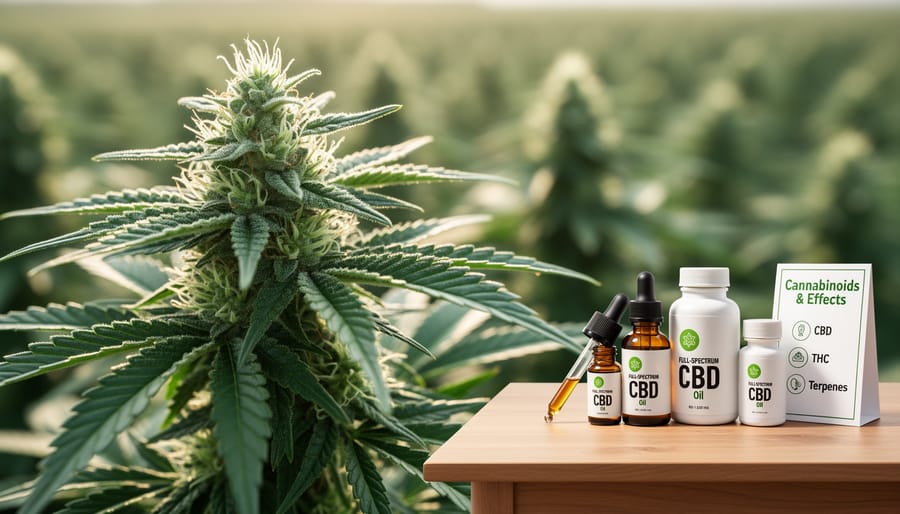
Here’s the thing about CBD products that trips people up: most of them do contain THC, just not enough to get you high. When I first started reviewing CBD vapes, I was surprised how many newcomers panicked when they saw any mention of THC on a lab report. Understanding why it’s there and what those tiny amounts actually mean is crucial for making smart product choices.
- Full-Spectrum CBD
- Contains all compounds naturally found in hemp, including trace amounts of THC (typically under 0.3% by weight). Offers the potential “entourage effect” where cannabinoids work together.
- Broad-Spectrum CBD
- Includes multiple hemp compounds but with THC removed or reduced to non-detectable levels. Provides some entourage effect benefits while minimizing THC concerns.
- CBD Isolate
- Pure CBD with all other cannabinoids, terpenes, and plant compounds removed. Contains zero THC but lacks the synergistic effects of other hemp compounds.
The reason full-spectrum products contain THC comes down to the plant itself. Hemp naturally produces small amounts of THC alongside CBD, and extracting the whole plant preserves this balance. Many users prefer full-spectrum because they believe the combination of cannabinoids works better than CBD alone, something researchers call the entourage effect.
Here’s the reality check: those trace amounts won’t intoxicate you. We’re talking about fractions of a percent, far below what would cause any high. I’ve vaped countless full-spectrum products over the years, and that minimal THC has never produced even a hint of intoxication. You’d need to consume an absurd amount to feel anything remotely psychoactive from the THC.
But here’s where it gets tricky, drug testing. Those trace amounts can accumulate in your system with regular use, potentially triggering a positive test result. It’s rare, but it happens, especially if you’re vaping CBD daily. This is exactly why I always emphasize checking lab reports when I review products. A quality CBD vape should include third-party testing that shows the exact THC content, not just vague claims about being “hemp-derived” or “legal.”
When you’re shopping, those lab reports aren’t optional reading, they’re essential. They tell you whether you’re getting full-spectrum, broad-spectrum, or isolate, and they confirm that THC levels match what’s advertised.
What This Means When Shopping for CBD Vape Products in 2026
Now that you know CBD won’t impair you, shopping gets much simpler. You’re not trying to avoid getting high, you’re choosing based on what you actually need: consistent quality, accurate labeling, and effects that match your goals.
Start with the lab report. Every reputable CBD vape product should have third-party testing results available, usually via a QR code on the packaging or the company’s website. I won’t buy anything without seeing these. The report should show cannabinoid content (confirming the CBD amount and any THC present) and verify the product is free from heavy metals, pesticides, and solvents. If a brand makes it hard to find this information, that’s your first red flag.
Pay attention to the spectrum type. Full-spectrum products contain trace THC and other cannabinoids, broad-spectrum has cannabinoids without THC, and isolate is pure CBD. Knowing CBD isn’t intoxicating means you can choose based on preference rather than fear. I’ve used all three types in various best vape pens and the main difference isn’t about getting high, it’s about the entourage effect and personal response.
Watch for dishonest marketing claims. When reviewing products, I’m immediately skeptical of brands that promise CBD will “cure” anything or make wildly specific health claims. Understanding CBD oil effects means recognizing realistic expectations, relaxation, calm, potential discomfort relief, not miracle transformations. The same goes for CBD gummies or any other format.
When reading reviews, apply this same knowledge. A reviewer claiming CBD “hit them like THC” or produced euphoria is either describing a mislabeled product or confusing placebo with actual effects. Good reviews describe subtle, grounded experiences and always mention lab testing.
Check the CBD concentration per puff or serving, not just the total bottle amount. A 1000mg vape cartridge sounds impressive until you realize it’s diluted across 200 puffs, that’s only 5mg per hit.
Common Myths Debunked: Setting the Record Straight
I’ve heard just about every CBD myth out there, from vape shop customers and online forums alike. Let’s tackle the big ones head-on, because clearing up these misconceptions matters when you’re choosing products.
**Myth 1: “CBD is just weak THC”**
Completely false. CBD and THC are entirely different molecules with different chemical structures and effects. They happen to come from the same plant family, but that’s where the similarity ends. Saying CBD is weak THC is like saying decaf coffee is just weak regular coffee, the compounds themselves are fundamentally different, not just diluted versions of each other. CBD doesn’t produce intoxication at any dose because it doesn’t bind to CB1 receptors the way THC does.
**Myth 2: “You can’t feel CBD working”**
This one’s tricky because CBD doesn’t create an obvious “high,” but many users absolutely notice its effects. I’ve personally felt the difference in my evening anxiety levels when vaping CBD compared to nights without it. The effects are subtle, think relaxation, reduced tension, a quieter mind, rather than dramatic. If you’re expecting a caffeine-level jolt or an alcohol-like buzz, you’ll be disappointed. But absence of intoxication doesn’t mean absence of effect.
**Myth 3: “All hemp products are the same”**
Not even close. Hemp-derived CBD products vary wildly in quality, cannabinoid profile, and purity. You’ve got full-spectrum products with multiple cannabinoids (including what is CBN and trace THC), broad-spectrum options with cannabinoids but no THC, and pure CBD isolate. The extraction method, source hemp quality, and manufacturing standards all matter enormously. This is exactly why lab reports and thorough product reviews exist.
**Myth 4: “CBD will show up on a drug test as THC”**
Pure CBD itself won’t trigger a positive drug test for THC, tests aren’t looking for CBD. However, full-spectrum CBD products containing trace amounts of THC could potentially cause a positive result, especially with regular, high-dose use. If you’re subject to drug testing, stick with broad-spectrum or isolate products with zero THC, and always verify through third-party lab reports.
Is CBD just a placebo effect?
No. Research shows CBD interacts with serotonin receptors, the endocannabinoid system, and other biological targets, producing measurable physiological effects. While placebo may enhance subjective experience, CBD has documented mechanisms of action.
Can you build a tolerance to CBD?
Unlike THC, CBD doesn’t typically produce tolerance with regular use. Some users actually report needing less over time, possibly due to CBD’s effects on the endocannabinoid system itself.
Will CBD counteract medications?
CBD can interact with certain medications by affecting liver enzymes that metabolize drugs. If you take prescription medications, consult your healthcare provider before using CBD products.
The bottom line is that understanding these distinctions helps you make smarter choices and set realistic expectations. When you know what CBD actually does (and doesn’t do), product marketing hype becomes a lot easier to see through.
So here’s the bottom line after everything we’ve covered: yes, CBD is technically psychoactive because it influences your mood and mental state. But no, it won’t get you high or leave you impaired. That’s the simple truth that cuts through all the confusing marketing and conflicting information out there.
I’ve spent years testing CBD products and talking with people in the vaping community, and this distinction matters more than you might think. Understanding that CBD affects your mind without intoxicating you helps you set realistic expectations. You won’t experience euphoria or altered perception, but you might notice genuine calm and physical relaxation. That’s exactly what you’re looking for if you’re turning to CBD instead of THC.
When you’re shopping for CBD vape products, this knowledge puts you in control. You’ll spot misleading claims immediately. You’ll know to check those lab reports for cannabinoid profiles and THC content. You’ll read reviews with a critical eye, recognizing when someone’s describing genuine CBD effects versus placebo or trace THC reactions.
The CBD space has grown so much, and with that growth comes both opportunity and noise. Being informed means you can cut through the hype and find products that actually deliver what they promise. You deserve clear information about what you’re putting in your body, and you deserve products that match your expectations. Start with the lab reports, read thorough reviews, and trust your own experience once you understand what CBD really does.