
Does CBD oil help you sleep? Maybe, for some people, but the evidence is mixed. A 2019 study in The Permanente Journal found that 66.7% of participants reported better sleep scores within the first month of CBD use. By month three, though, the effect had stabilized or faded for nearly half the group. So it’s not a sure thing, and it’s not a dud either.
That tracks with what you see in the wild. One report estimates that 42.5% of CBD users take it for sleep-related issues, and it suggests CBD may help some people fall asleep faster and feel more relaxed. But results shift with body weight, liver function, medications, and existing health conditions, which is why your friend swears by their bedtime drops while you notice nothing.
Side effects are part of the picture too. The same report puts the share of CBD users who experience them somewhere between 11.9% and 30%. If you take any medication or have a health condition, talk to your doctor before you try it.
This guide won’t promise a cure for sleepless nights. What it will do is help you choose a CBD oil for sleep with clear eyes: what to look for, how the main product types compare, and which common mistakes to skip.
Does CBD Oil Help You Sleep? What the Research Actually Says
The Early Results Look Promising, but the Story Doesn’t End There
When I first read about the 2019 study in The Permanente Journal, the opening numbers grabbed me. Researchers found that 66.7% of participants had improved sleep scores within the first month of CBD use. That’s two out of three people reporting better sleep, which sounds like a pretty strong case for trying it.
But the story doesn’t stop there. By month three, the sleep effects had stabilized or diminished for nearly half the group. In other words, the early boost didn’t hold up for a big chunk of people.
I get why those first-month results feel so convincing. When you start something new at bedtime, you’re paying close attention, you may be winding down more deliberately, and a good night or two can feel like proof. That’s a natural human thing, and it’s not a knock on anyone’s experience. It just means one great week isn’t the whole picture.
This is why tracking your sleep over a longer stretch matters. A simple notes app or journal can show you whether a change lasts or fades. If you’re curious how CBD might interact with specific parts of your night, our breakdown of CBD and REM sleep digs into that side of the research. Either way, the honest takeaway is that early promise is encouraging, but it isn’t a guarantee.
Why Results Vary From Person to Person
If you’ve ever wondered why your friend swears CBD oil knocks them out while you feel basically nothing, you’re not imagining it. The research says how CBD affects any one person depends on several individual factors, and those can shift the experience quite a bit.
- Body weight can change how a given amount of CBD affects you.
- Liver function matters because the liver processes CBD.
- Medications you already take may interact with CBD.
- Existing health conditions can shape how your body responds.
This is a big reason the evidence on CBD and sleep looks so mixed. Two people can try the same oil and walk away with completely different stories. So treat other people’s results, including mine, as one data point, not a forecast for you.
Because of those variables, it’s smart to check in with a doctor or pharmacist before you start, especially if you take any medications or have liver concerns. They can look at your full picture, which a bottle label and a blog post simply can’t do. It takes a few minutes, and it’s one of the easiest ways to try CBD more safely.
Key Buying Factors When Choosing a CBD Sleep Oil in Canada
Reading a Label and Lab Report Like a Pro
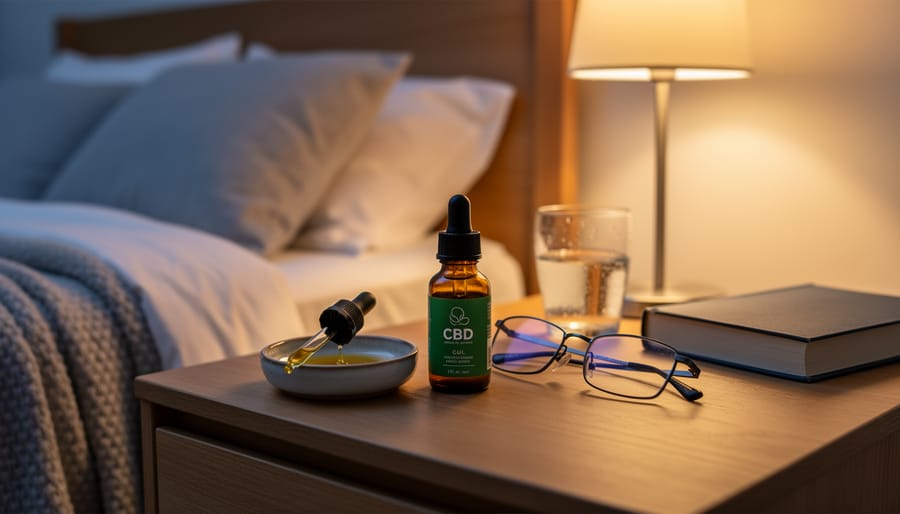
A certificate of analysis (COA) is the lab report that shows what’s actually inside a bottle. Most reputable brands link to one on the product page or print a QR code on the box. Think of it as the receipt that proves the label isn’t just marketing.
Start with the cannabinoid panel. This lists how much CBD (and sometimes CBN or THC) the lab found, usually in milligrams per milliliter or per serving. Compare that number to what’s printed on your bottle. If the label says one thing and the lab says something noticeably different, that’s a red flag.
A few terms you’ll run into:
– Potency simply means how much of a compound is in the product.
– ND means “not detected,” which is what you want to see for anything you don’t expect, like THC in a THC-free oil.
– Batch or lot number ties the report to your specific bottle. Make sure the numbers match.
– Third-party lab means an independent company did the testing, not the brand itself.
Also check the test date and whether contaminant screening, like pesticides or heavy metals, is included. Since sources describe the sleep evidence as mixed, you want to be sure you’re at least getting what you paid for before you judge whether it works for you.
Checking Regulatory Status Before You Buy
Before you buy anything, check the current rules yourself. Canadian regulations and licensed-retailer requirements can change, and this article doesn’t cover their current details, so go straight to official sources like Health Canada rather than relying on a blog post (including this one) for what’s legal or allowed. It takes a few minutes and saves headaches later.
It also helps to remember that regulators such as the FDA and FTC have scrutinized CBD marketing claims in the U.S. That’s a good reminder to stay skeptical of any brand promising miracle sleep results, especially since the evidence on CBD and sleep is genuinely mixed.
Once you’ve confirmed what’s allowed, you can compare products with more confidence. If you’re still deciding where to begin, our roundup of the best CBD oil options is a handy starting point for narrowing down your shortlist.
CBD Oil vs. CBN vs. Other Sleep-Focused Options: Types Compared
When people shop for sleep support, the same few formats keep coming up: CBD oil, gummies, vape-style CBD, and CBN products. None of them has a clear win on the evidence. The research on CBD and sleep is genuinely mixed, so the real question is which format fits your routine and which one you’ll actually use consistently.
Here’s how they stack up.
| Product type | How it’s typically taken | Evidence for sleep | Reported side effects | Key consideration |
|---|---|---|---|---|
| CBD oil / tincture | Drops, usually under the tongue or in food | Mixed and limited | 11.9%, 30% of CBD users | Easy to adjust your serving; check the label for CBD per serving |
| CBD gummies | Chewed like candy | Mixed and limited | 11.9%, 30% of CBD users | Convenient and pre-portioned; mind the sugar and the label |
| Vape-format CBD | Inhaled through a vape device | Mixed and limited | 11.9%, 30% of CBD users | Experienced vapers may like the format; follow the product’s instructions |
| CBN products | Oils, gummies, and similar formats | Limited and mixed | 9.9% of CBN users | A different compound from CBD, so don’t assume the same results |
That 11.9%, 30% range comes from one report, and the 9.9% figure for CBN comes from the same source. The numbers don’t mean CBN is safer or better. They just show that side effects happen with both, and that the evidence is still thin.
A few things matter more than the format itself. One report says CBD may help some people fall asleep faster and feel more relaxed, but how it affects you depends on body weight, liver function, medications, and existing health conditions. That’s why a friend’s favourite product can do nothing for you.
If you’re curious about the differences between the two compounds, our guide on CBD vs CBN breaks them down. If you like the idea of a chew, our roundup of CBD gummies covers what to look for on the label. Whatever you pick, a doctor or pharmacist is worth a chat first, especially if you take any medications.
A quick note for readers who vape CBD. Read the product’s instructions and stick to them. If vaping close to bedtime leaves you feeling wired or restless, move it earlier in the evening, since the goal is better rest. And never vape in bed. If you’re new to the format, our CBD vaping basics walks through the essentials. And if vaping isn’t your thing, that’s completely fine. Oils and gummies cover the same ground without a device.
Our Recommendations: How to Pick the Right Format for Your Routine
Since the evidence is mixed, I’d treat picking a format as matching your routine, not chasing a “best” product. Here’s how I’d think it through.
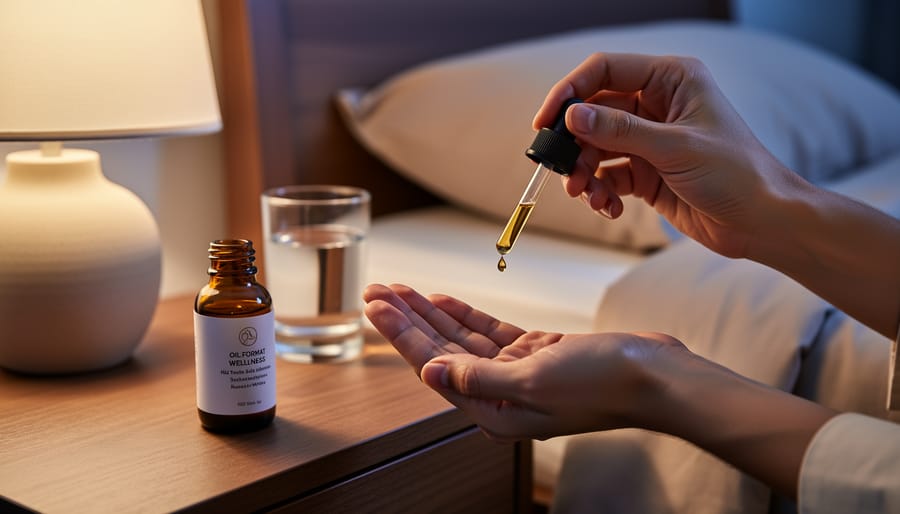
If you like a simple, predictable ritual, an oil is easy to fit in. If you’d rather keep things fuss-free, gummies make the evening routine feel effortless. If you already vape CBD, keep it to the way you’d normally use it and never vape in bed. Whichever you choose, follow the label’s directions, start low, and go slow. More isn’t automatically better, and your body will tell you quickly if something doesn’t agree with you.
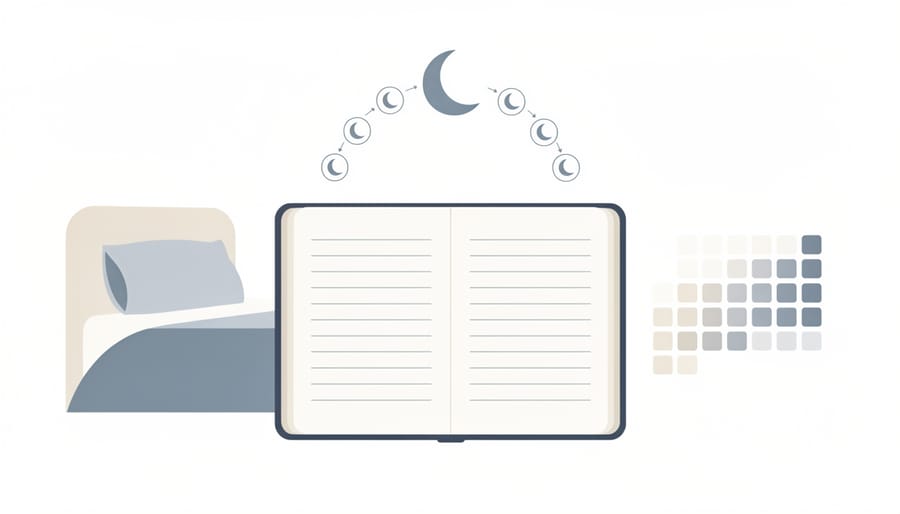
Then comes the part I wish I’d done sooner: keep a simple sleep journal. When I first tried an evening product, I assumed I was sleeping better because I’d bought into the idea. Once I jotted down bedtime, how long it took to drift off, and how I felt in the morning, the picture was a lot more honest. Some nights looked better, others looked the same.
That’s worth doing because early results can fade. In the 2019 Permanente Journal study, 66.7% of participants improved in the first month, yet by month three the effects had stabilized or diminished for nearly half the group. So reassess after a few weeks instead of judging it on night one.
Finally, check in with a doctor or pharmacist, especially if you take any medications. Body weight, liver function, and existing health conditions can all change how CBD affects you.
Common Mistakes to Avoid When Buying CBD for Sleep
Most of the trouble I see comes from a handful of avoidable slips. Here are the ones worth watching for, each with a quick fix:
- Expecting a guaranteed result. Evidence on CBD for sleep is genuinely mixed, so treat it as something to test, not a sure thing.
- Skipping the lab report. Look for third-party testing and check that the label matches the results.
- Ignoring medication interactions. How CBD affects you depends on things like body weight, liver function and medications, so ask a doctor or pharmacist first.
- Buying on price alone. Cheap bottles with vague labels or no testing aren’t a bargain if you can’t trust what’s inside.
- Assuming more is better. Follow the product label and start low, rather than increasing amounts hoping for a stronger effect.
- Not tracking results. Jot down how you sleep for a few weeks so you can see whether it’s really helping.
- Leaning on CBD alone. It’s no substitute for solid sleep habits or medical advice.
That tracking point matters more than people expect. In a 2019 study in The Permanente Journal, 66.7% of participants had improved sleep scores in the first month, yet by month three the effects had stabilized or diminished for nearly half the group. An early boost doesn’t always last.
Side effects deserve honest mention too. A report says 11.9%, 30% of CBD users experience them, so they’re not unusual, but they aren’t a reason to panic either. If something feels off, stop and check in with a healthcare professional. The same goes for sleep trouble that sticks around: a doctor can look at the bigger picture in a way a bottle of oil can’t.
Frequently Asked Questions About CBD Oil and Sleep
Does CBD oil really help you sleep?
The honest answer is that the evidence is mixed. Some people report falling asleep faster and feeling more relaxed, but results vary from person to person and nothing is guaranteed.
How long does it take to work?
There’s no reliable timeline, since it depends on the product, the person, and their routine. Check the product label for guidance and ask a doctor or pharmacist what makes sense for you.
Can CBD stop working over time?
It’s possible. In the 2019 study in The Permanente Journal, sleep effects had stabilized or diminished for nearly half the group by month three, which is why tracking your own results matters.
Are there side effects?
Yes. A report says 11.9%, 30% of CBD users report side effects, so it’s worth starting cautiously and paying attention to how you feel.
Is CBD the same as CBN?
No, they’re different compounds. In the same report, 9.9% of CBN users reported side effects, and the evidence for both remains limited and mixed.
Should I talk to a doctor first?
Yes, especially if you take medications or have liver concerns. The same report notes that effects depend on body weight, liver function, medications, and existing health conditions.
If you vape CBD, follow the product instructions, never vape in bed, and pay attention to whether it helps or disrupts your rest. Persistent sleep trouble is worth a conversation with a healthcare professional rather than a product swap.

So, does CBD oil help you sleep? For some people, it may help them relax or drift off a bit faster, but the evidence is mixed and results really do vary from person to person. Early numbers can look encouraging, yet in the study we covered, the effects had stabilized or faded for nearly half the group by month three.
If you decide to try it, keep the basics in mind: choose a product with clear labeling, check the third-party lab report, and look up current Canadian rules with official sources before you buy. Then pay attention to your own experience. A simple sleep journal over a few weeks tells you more than any headline will.
And please check in with a doctor or pharmacist first, especially if you take medications. Sweet dreams, and be kind to yourself while you figure out what works.