
You’ve probably seen CBN popping up on sleep tinctures and nighttime gummies lately, positioned as cannabis’s answer to melatonin. I first encountered it about two years ago when a friend handed me a “sleep blend” vape cartridge that absolutely knocked me out, and I’ve been curious about this lesser-known cannabinoid ever since.
CBN, or cannabinol, forms when THC breaks down over time through exposure to heat, light, and oxygen. That’s why older cannabis tends to make people drowsy rather than high. Unlike CBD and THC, which the plant actively produces, CBN is essentially aged THC that’s lost most of its psychoactive punch. Think of it as THC’s mellow older sibling.
Here’s what caught my attention: CBN doesn’t get you stoned like THC, and it doesn’t work quite like CBD either. Early research and plenty of anecdotal reports (mine included) suggest it has genuine sedative properties, though scientists are still figuring out exactly how strong those effects really are. The studies we have are small, and most of the evidence comes from people’s personal experiences rather than large clinical trials.
What makes CBN particularly interesting in 2026 is how it’s showing up in products specifically designed for sleep. I’ve tested several CBN vape cartridges and tinctures, and while results vary from person to person, there’s definitely something there. But you need realistic expectations. This isn’t a pharmaceutical sleep aid, and the research backing is still developing.
If you’re considering trying CBN products, understanding what it actually is and what the science currently supports will help you make smarter choices about whether it’s worth exploring for your needs.
What Exactly Is CBN in Weed?
If you’ve been exploring CBD products, you’ve probably started seeing CBN pop up on labels everywhere. I know I did, and honestly, my first thought was “great, another acronym to learn.” But here’s the thing: what is CBN isn’t just CBD’s cousin with a typo. It’s a completely different cannabinoid with its own unique story.
CBN, or cannabinol, is one of the more than 100 cannabinoids naturally found in cannabis plants. Think of cannabinoids as the plant’s active compounds, each with different potential effects on your body. You’re likely already familiar with THC (the one that gets you high) and CBD (the one that doesn’t). CBN sits somewhere between them, but with a twist.
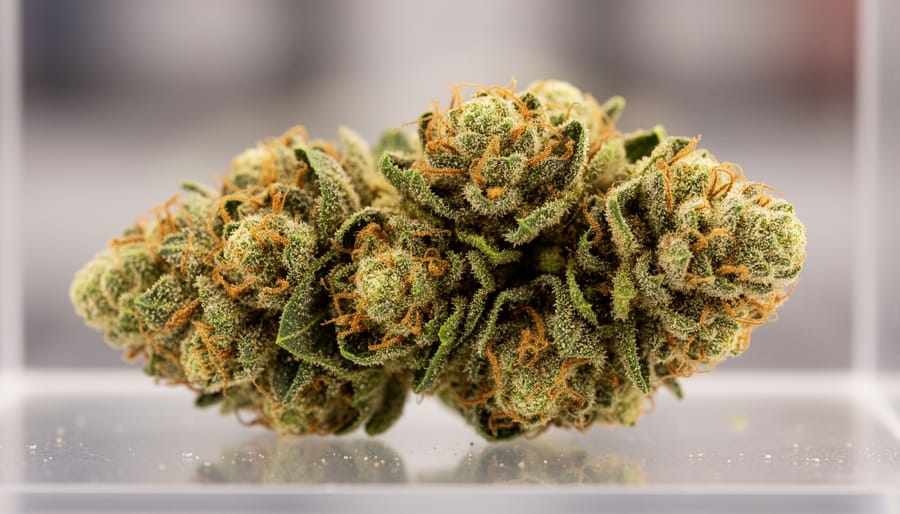
Here’s where CBN gets interesting. Unlike CBD, which comes directly from fresh cannabis plants, CBN forms when THC ages and breaks down. Leave your weed sitting in a drawer for months? That degraded, slightly brownish product has higher CBN levels than when it was fresh. Heat, light, and oxygen all speed up this process. It’s basically what happens when THC gets old and tired.
I’ll be honest, when I first learned this, I thought “so CBN is just expired THC?” Not quite. While CBN does come from THC breaking down, it creates something genuinely different. The oxidation process changes the molecular structure, giving CBN its own properties that don’t match either its parent compound (THC) or its better-known sibling (CBD).
This aging origin is why you won’t find CBN-rich strains growing naturally. Instead, producers either age THC-rich cannabis intentionally or use specific extraction and conversion processes to create CBN products. It’s a bit like how grape juice becomes wine through transformation, not just by being grape juice in a different bottle.
CBN vs CBD: What Canadian Cannabis Users Need to Know
How CBN Affects Your Body Differently
Here’s the thing that confused me when I first learned about CBN and CBD: they work with your body’s endocannabinoid system in similar ways, but the experience is completely different. Both interact with CB1 and CB2 receptors throughout your body, yet CBD tends to make you feel alert and focused, while CBN has this sedating quality that makes your eyelids heavy.
The key difference comes down to how tightly each cannabinoid binds to those receptors. CBD has a loose relationship with CB1 receptors (the ones concentrated in your brain and nervous system), which is why it doesn’t make you feel intoxicated or sleepy. It kind of just nudges the system gently. CBN, on the other hand, binds more directly to CB1 receptors, though still way less intensely than THC. This creates what researchers describe as same receptors, different effects.
What really caught my attention was learning that CBN might work through active metabolites, meaning your body transforms it into compounds that create the actual sleep-promoting effects. That’s a different mechanism than CBD’s more straightforward action.
Think of it this way: CBD is like adjusting the volume on your body’s stress response, while CBN is more like dimming the lights before bed. Same house, different switches.
Why CBN Is Being Called the ‘Sleep Cannabinoid’
The sleep connection comes up almost immediately when you start researching CBN. Walk into any Canadian cannabis shop in 2026 and you’ll hear budtenders describe it as “the sleepy cannabinoid,” and there’s actually some solid reasoning behind that nickname.
The most compelling evidence comes from a 2023 trial reduced awakenings and improved overall sleep disturbance in participants. That’s meaningful because nighttime awakenings, not just falling asleep, are often the real issue for people struggling with sleep. This study used actual objective sleep measures, which gives it more weight than simple self-reporting.
What makes the science even more interesting is research published in Nature showing that CBN’s sleep effects might come from an active metabolite, a compound your body creates when it breaks down CBN. This suggests the sleep benefits aren’t just about CBN itself but how your body processes it, which is a different mechanism than many sleep aids.
Here’s where honesty matters, though. The anecdotal reports are way ahead of the clinical evidence. Tons of people swear by CBN for sleep, and product manufacturers are rushing CBN formulas to market. But we’re talking about a handful of solid studies versus hundreds for CBD or thousands for THC. The research that exists is encouraging, but it’s not comprehensive enough to make sweeping claims.
When I first tried CBN, I fell into the same trap, expecting it to knock me out like a pharmaceutical sleep aid. That’s not what happened. Instead, I noticed I stayed asleep longer and woke up less foggy. Your experience might differ completely.

The Science Behind CBN: What We Actually Know in 2026
Here’s the reality: CBN research is still in its early days, and anyone telling you otherwise is overselling what we actually know. That said, the science we do have is genuinely encouraging, especially if you’re struggling with sleep.
The most significant study came out in 2023, a proper double-blind randomized controlled trial that showed CBN reduced nighttime awakenings and improved overall sleep disturbance in participants. This wasn’t just people reporting they felt better; researchers used objective sleep measures to track actual changes. For anyone familiar with clinical research, you’ll recognize how meaningful that design is compared to the anecdotal reports that dominate cannabinoid discussions.
What made this study particularly interesting was the discovery that CBN’s sleep effects seem to work through what the researchers called active metabolites explain hypnotic action basically, CBN converts into other compounds in your body that produce the sedative effects. This helps explain why CBN works differently than CBD or other cannabinoids.
But here’s where I need to be honest with you. Beyond this promising research, the body of evidence is thin. We don’t have large-scale, long-term human studies. We’re missing comprehensive safety data for different populations. The research on pain management remains mostly anecdotal, even though many users report benefits.
Compare this to CBD, which has hundreds of published studies and years of widespread use data. CBN simply hasn’t been studied as extensively. The cannabis research community is playing catch-up because CBN wasn’t a priority until recently, when people started noticing its unique properties in aged cannabis.
When I first tried CBN, I went in with realistic expectations shaped by this limited research landscape. I wasn’t expecting a miracle sleep cure, but I was curious about that 2023 trial’s findings. The key is approaching CBN as an emerging compound with genuine potential rather than an established solution with decades of proven results behind it.
CBN Products: What You’ll Find on Canadian Shelves
CBN in Vape Products: My Personal Take
I’ll be honest: vaping CBN caught me off guard. I’ve been vaping CBD oil formulas for years, so when CBN vape cartridges started appearing at my local dispensary in 2024, I figured they’d work basically the same way. They do, but with one crucial difference: the onset time hits differently when you’re trying to wind down for sleep.
With CBD vapes, I got used to feeling the calming effects within minutes, which is perfect for daytime anxiety. CBN vapes deliver that same quick absorption through your lungs, but the sedative quality creeps up more gradually. I noticed this most clearly about 15-20 minutes after vaping, when my thoughts started slowing down rather than just my heart rate dropping.
The trade-off versus CBD gummies or oils comes down to control and timing. Vaping lets you micro-dose: a puff or two an hour before bed, then maybe another if you’re still wired. Gummies lock you into whatever dose you swallowed two hours earlier. That flexibility matters when you’re figuring out your personal threshold, especially since CBN research is still limited and there’s no established dosing guide.
One heads-up: CBN vape products often come blended with CBD or minor cannabinoids like CBG. I actually prefer these combinations over pure CBN for a more balanced experience, but check the ratio on the label so you know what you’re actually inhaling.

Should You Try CBN? Real Talk from Someone Who Has
Here’s the thing: I can’t tell you whether CBN is right for you, but I can share what happened when I tried it and who might want to give it a shot.
If you’re lying awake at 3 a.m. scrolling your phone, or you wake up multiple times each night and struggle to fall back asleep, CBN is worth exploring. That 2023 clinical trial showing reduced nighttime awakenings caught my attention because that’s exactly what I was dealing with. I fell asleep fine but would wake up around 2 or 3 and stay awake for an hour or more. After trying a CBD+CBN tincture for about two weeks, I noticed I was either sleeping through or falling back asleep much faster when I did wake up.
But let’s be realistic about expectations. CBN isn’t a miracle sleep drug. It won’t knock you out like a prescription medication, and it won’t work the same for everyone. The research is still limited, and most evidence remains anecdotal. Some nights it worked great for me, other nights less so. I also found the effects were subtle, not dramatic, which actually suited me better than anything that left me groggy.
Who might benefit? People struggling with sleep maintenance rather than falling asleep initially, those looking for something gentler than pharmaceutical sleep aids, and anyone curious about cannabinoids beyond CBD who wants to try something backed by at least some emerging research.
Who should probably skip it for now? If you’re looking for immediate, powerful results, if you’re uncomfortable with the limited research base, or if the products available in your area are expensive and you’re on a tight budget.
My honest take: CBN has become part of my routine, but I approach it as one tool among several for better sleep, not a standalone solution. It’s worth trying if you’re curious and can afford to experiment a bit, but keep your expectations grounded in what the science actually shows right now.
So that’s where we’re at with CBN in 2026. It’s not a miracle cure, and anyone promising you guaranteed results is overselling what the research actually shows. But it’s also not just hype. The emerging evidence around sleep support is genuinely interesting, and the fact that it forms through aged THC makes it fundamentally different from the CBD you might already be using.
I think CBN is worth keeping on your radar, especially if you’re someone who struggles with nighttime awakenings. Just approach it the same way you would any emerging cannabinoid: do your homework, start conservatively, and pay attention to how your body actually responds rather than what marketing claims suggest.
The cannabis landscape keeps evolving, and honestly, that’s part of what makes it interesting. Five years ago, most people had barely heard of CBD. Now we’re having informed conversations about CBN, CBG, and a dozen other cannabinoids. Stay curious, but stay critical too. Read the actual research when you can, ask questions about product sourcing and testing, and don’t be afraid to say “I’ll wait until we know more” if that feels right.
The science will catch up eventually. Until then, you’ve got the basics to make informed decisions about whether CBN fits into your wellness routine.