
There’s no single “normal” CBD size because what counts as standard depends entirely on the product type you’re buying. A typical CBD oil tincture bottle holds 30ml (one fluid ounce), while vape cartridges usually come in 0.5ml or 1ml sizes, and edibles are sold individually or in packs of 5-30 pieces. Here’s what matters more than physical size: the actual CBD content measured in milligrams, which can range anywhere from 250mg to 2,500mg or higher in the same-sized bottle.
When I first started exploring CBD products back in 2019, I made the rookie mistake of assuming a bigger bottle meant more CBD. I grabbed what looked like a generous 60ml tincture, only to realize later it contained less total CBD than a 15ml concentrate I’d passed over. Package dimensions tell you almost nothing about potency or value.
The confusion around “normal” sizing stems from the fact that CBD products aren’t standardized the way prescription medications are. Different manufacturers use different container sizes, concentration levels, and serving measurements. What’s typical for one brand’s CBD gummies might be completely different from another’s. Understanding this variety helps you compare products accurately and choose sizes that match your usage patterns, whether you’re microdosing daily or taking larger amounts for specific purposes.
Why ‘Normal’ CBD Size Is So Confusing
Here’s what makes the whole “normal CBD size” question such a headache: there’s no universal standard. Unlike prescription medications that come in strictly regulated doses, CBD products span a wild range of formats, each with its own sizing conventions. A vape cartridge measured in milliliters has nothing in common with a jar of gummies counted by pieces, or a topical cream sold by container weight. You’re essentially comparing apples to oranges to… balms.
The confusion deepens when you factor in CBD concentration. Two bottles might look identical on the shelf, but one contains 300mg of CBD while the other packs 1500mg. Package dimensions tell you almost nothing about what you’re actually getting. I learned this the hard way early on, grabbing what I thought was a great deal on a large bottle, only to realize the CBD content was diluted to the point where I’d need twice as much per dose.
Regional regulations add another layer of complexity. In Canada, for instance, cannabis products must follow standardized labeling requirements and extracts or topicals face a 1000mg THC limit per container. These rules affect how products are packaged and sized, but they vary dramatically from one country or state to another. What’s considered a standard size in Colorado might be illegal in another jurisdiction.
The result? No single answer exists for what’s “normal.” It depends entirely on the product type, your location, and what the manufacturer decided to produce.
Understanding CBD Package Sizes Across Product Types
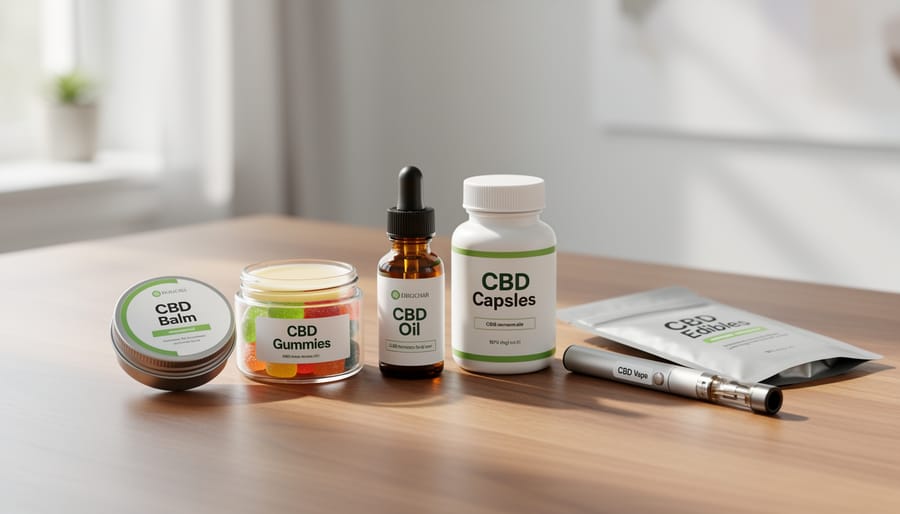
CBD Vape Products: Cartridges and E-Liquids
CBD vape cartridges typically come in two standard sizes: 0.5ml and 1ml. These are the industry norms you’ll find almost everywhere, from specialty vape shops to dispensaries. E-liquid bottles run larger, with 10ml, 30ml, and 60ml being the most common sizes on shelves.
From my own experience, a 0.5ml cartridge lasts me about three to five days with moderate evening use, a few puffs after work to unwind. Push that to all-day vaping, and you’re looking at closer to two days. The 1ml size doubles that lifespan, making it the more economical choice if you’re a regular user and you’ve already settled on a brand you trust.
Beginners usually gravitate toward the smaller 0.5ml cartridges, and that makes sense. You’re still figuring out what strength works for you, which flavours you like, and whether vaping CBD fits your routine at all. Committing to a full millilitre feels riskier when you’re not sure you’ll finish it. There’s also the freshness factor: CBD loses potency over time once a cartridge is opened, so smaller sizes mean less waste if your usage is occasional.
For e-liquids, the 10ml bottles appeal to newcomers for the same reasons. Regular users typically buy 30ml or 60ml bottles because the per-millilitre cost drops significantly. I switched to 30ml bottles once I knew my preferred concentration, and the savings add up quickly when you’re refilling a pod system weekly.
CBD Oils and Tinctures
When you’re shopping for the best CBD oil you’ll notice bottles typically come in three main sizes: 15ml, 30ml, and 60ml. These aren’t arbitrary, they’ve become industry standards because they balance practicality with value.
The 15ml bottle is perfect for beginners or anyone wanting to test a new brand without committing to a larger purchase. It’s compact, travels easily, and won’t go to waste if you decide the product isn’t for you. The 30ml size hits the sweet spot for most regular users, offering enough product to last several weeks of daily use while keeping costs reasonable. Meanwhile, 60ml bottles appeal to committed users who’ve found their ideal product and want the best price per milliliter.
Here’s what caught me off guard when I started: bottle size tells you almost nothing about how much CBD you’re actually getting. A 30ml bottle might contain 300mg of CBD or 3000mg, depending on concentration. The dropper that comes with most tinctures typically holds about 1ml when full, but you need to do the math to know how many milligrams are in each drop.
That’s why reading the label carefully matters more than grabbing the biggest bottle. Focus on total CBD content and concentration rather than physical size.
CBD Gummies and Edibles
CBD gummies are among the most popular ways to take CBD, and they typically come in bottles or bags containing 10, 30, or 60 pieces. These counts aren’t random, they match how people actually use the product. A 10-count package works well if you’re testing a new brand or flavor before committing, while 30-count bottles align neatly with a month of daily use at one gummy per day. For regular users or those taking multiple gummies daily, 60-count packages offer better value and fewer trips to restock.
Individual serving sizes usually range from 10mg to 25mg of CBD per gummy, though you’ll find some with 5mg for microdosing or 50mg for higher needs. When you’re comparing the best CBD gummies check both the package count and the CBD content per piece, a 30-count bottle with 10mg gummies contains 300mg total CBD, while the same count at 25mg each delivers 750mg. That difference matters for your wallet and your routine. I’ve found that starting with a smaller count lets you gauge how long a package lasts based on your dosing pattern before you invest in bulk.
CBD Topicals and Creams
CBD topicals come in smaller packages than you might expect, and there’s a good reason for that. Most creams, balms, and lotions range between 30ml and 100ml containers, with 50ml being the sweet spot for both manufacturers and users. I’ve found these sizes surprisingly practical, a little goes a long way when you’re applying topically, so a 50ml jar can last weeks even with daily use.
The smaller sizing isn’t just about convenience. If you’re shopping for CBD cream in Canada you’ll notice strict container limits. Canadian regulations cap cannabis topicals at 1000 mg THC per container which directly influences how products are packaged and sized. This means even if a brand wanted to offer a giant economy-size jar, they legally can’t exceed that THC threshold per unit.
For CBD-dominant topicals with minimal THC, you might see slightly larger containers, but most manufacturers stick to similar sizing for consistency across product lines. Balms typically come in even smaller tins, 15ml to 30ml, because their concentrated formulas require less product per application. When choosing a size, consider how often you’ll use it and whether you’re targeting a small area like a sore joint or larger regions like your back and shoulders.
What Matters More Than Package Size: CBD Concentration
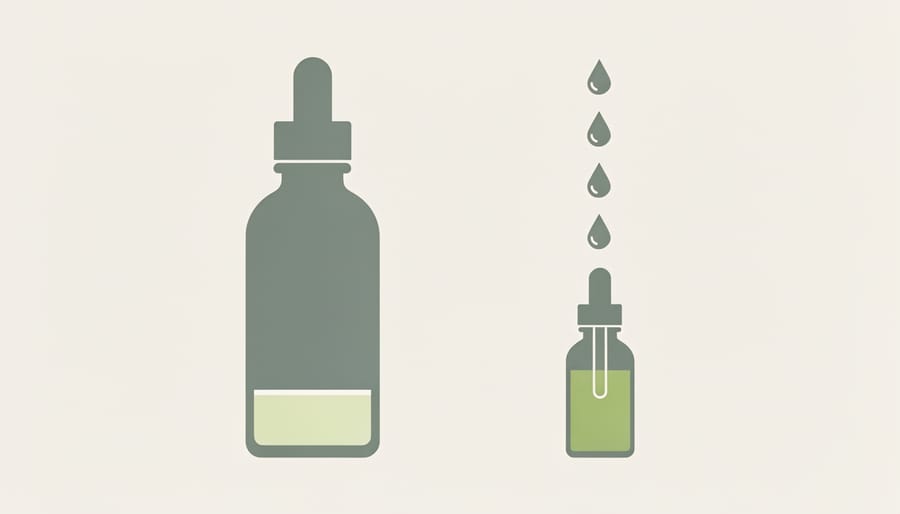
When I first started buying CBD, I made the rookie mistake of thinking a bigger bottle meant better value. I’d grab a 60ml tincture bottle, feeling smart about my purchase, only to realize later it contained less actual CBD than a tiny 15ml bottle I’d passed over. That lesson taught me what really matters: it’s not the container size, it’s what’s inside that counts.
The amount of CBD in a product is measured in milligrams (mg), and this number tells you far more than the physical package ever could. A small vape cartridge might pack 500mg of CBD, while a large bottle of oil could contain only 300mg. Understanding these measurements is crucial for getting what you actually need and not wasting money on products that look impressive but deliver less.
- Total CBD Content
- The complete amount of CBD in the entire package, expressed in milligrams. This number tells you how much CBD you’re buying altogether, regardless of package size.
- CBD Concentration
- The strength of CBD per unit of volume, typically shown as mg/ml. Higher concentration means more CBD packed into each milliliter of product.
- CBD Per Serving
- The amount of CBD you get in a single use, one dropper of oil, one gummy, one puff of a vape. This helps you understand how many servings the package contains and plan your usage accordingly.
Reading labels correctly takes practice, but the formula is straightforward. For oils and tinctures, look for two numbers: total CBD content and bottle size. If you see “1500mg CBD” in a 30ml bottle, divide 1500 by 30 to get 50mg per milliliter. A standard 1ml dropper would give you roughly 50mg per serving.
For gummies and edibles, the math is simpler. A package labeled “300mg CBD, 30 gummies” means each gummy contains 10mg. I learned to check this calculation myself after buying what I thought was a strong product, only to discover each piece had just 5mg, barely noticeable for my needs.
With vapes, the cartridge size (usually 0.5ml or 1ml) matters less than the total CBD content listed. A 0.5ml cartridge with 250mg CBD is exactly as potent as a 1ml cartridge with 500mg, both deliver 500mg per milliliter of liquid.
The key takeaway? Always calculate the actual CBD you’re getting per dose, not just the package size. This approach has saved me from countless disappointing purchases and helped me find products that actually work for my routine.
How to Choose the Right Size for Your Needs
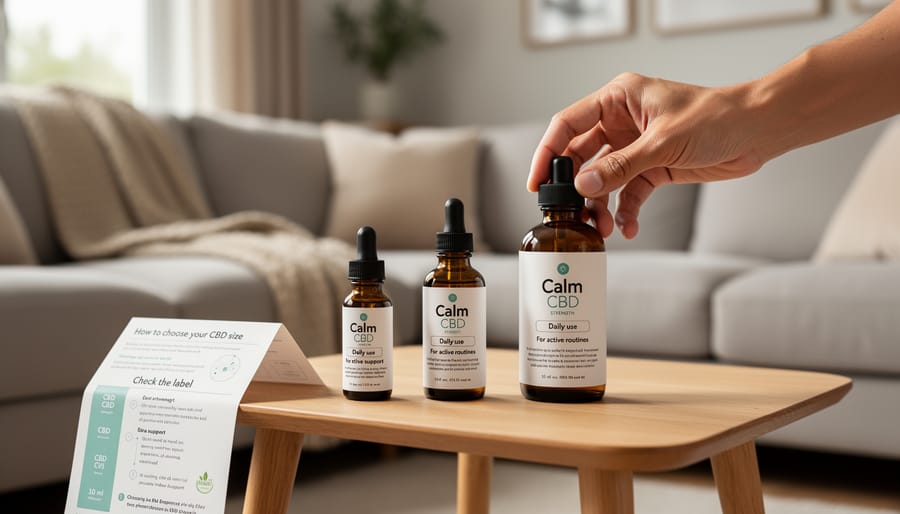
Choosing the right CBD size isn’t about finding a universal answer, it’s about matching the product to your life. I learned this the hard way after buying a massive 60ml tincture bottle on sale, only to watch it sit in my cabinet for months because I wasn’t using it consistently enough.
Start with your usage frequency. If you’re taking CBD daily, a 30-day supply makes sense, that’s usually a 30ml tincture, a 30-count gummy jar, or a couple of 1ml vape cartridges depending on your intake. Occasional users should start smaller. A 15ml oil or single cartridge lets you test effectiveness without committing to a large quantity that might lose potency before you finish it.
Your experience level matters too. Beginners benefit from smaller sizes while they dial in their ideal dose. I always recommend starting with a 15ml tincture or 10-count gummy pack. You can experiment with different strengths and brands without breaking the bank. Once you know what works, scaling up to larger packages becomes more economical.
Budget considerations tie directly to shelf life. CBD products typically stay potent for 12 to 18 months when stored properly, but oils can degrade faster once opened. Buying in bulk saves money per milligram, but only if you’ll actually use it. I’ve found the sweet spot is purchasing a one to two month supply, enough to benefit from volume pricing without risking waste.
Think about your goals too. Managing chronic discomfort might justify larger sizes, while trying CBD for occasional stress relief calls for smaller packages. Don’t let anyone pressure you into buying more than you need. The right size is whatever you’ll actually finish while it’s fresh and effective.
Labeling and Regulatory Considerations You Should Know
Regulations shape how CBD products are packaged and labeled, especially when they contain any THC. In Canada, for example, cannabis products that contain more than 10 micrograms per gram of THC must display the standardized cannabis symbol on the front of the package. This bright yellow triangle with a stop-sign aesthetic helps consumers immediately identify THC-containing products at a glance.
The rules also dictate actual package sizes. For cannabis extracts and topicals in Canada, each immediate container can’t hold more than 1000mg of THC. This cap explains why you might see smaller bottles for high-THC concentrates or why some topicals come in multiple smaller jars rather than one big tub. Understanding the difference between CBD vs THC content is crucial here, since pure CBD products face different constraints than those containing THC.
These regulations aren’t just red tape. They help you spot legitimate products that follow safety standards and provide accurate labeling. When a package displays proper symbols, clear concentration info, and falls within regulated size limits, it signals that the manufacturer is following the rules and likely producing a quality product.
So what’s the bottom line on “normal” CBD size? There isn’t one. What’s typical for a daily vape user looks nothing like what works for someone applying a topical twice a week. The “normal” size is simply the one that fits your routine, your experience level, and your goals.
Throughout my own CBD journey, I’ve learned that obsessing over package dimensions misses the point entirely. A tiny 0.5ml cartridge packed with 500mg of CBD delivers far more value than a huge bottle with weak concentration. Always check the label for actual CBD content, read what you’re getting per serving, and prioritize quality over quantity.
My advice? Start with smaller sizes while you’re figuring things out. You can always scale up once you know what works. Experiment with different formats and strengths without committing to bulk purchases right away. And please, stick with reputable brands that provide clear lab results and transparent labeling, your body deserves better than mystery products with vague claims.
There’s no wrong answer here, just the answer that’s right for you.