
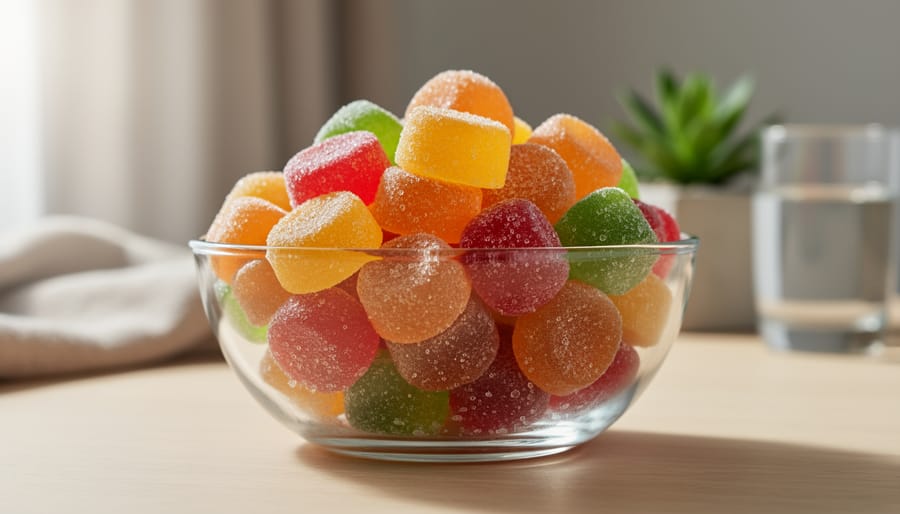
CBC gummies are edible products infused with cannabichromene, a non-intoxicating cannabinoid found in hemp and cannabis that’s just starting to appear in mainstream wellness products. If you’ve been following the CBD space, you’ve probably noticed CBC showing up on ingredient labels lately, but here’s the thing: you’ll rarely find pure CBC gummies. Most products blend CBC with other cannabinoids like CBD, CBG, or THC to create what manufacturers call the entourage effect, where compounds work together rather than in isolation.
I’ve been tracking cannabinoid products for years, and CBC is probably the least understood of the major cannabinoids. While CBD exploded into a billion-dollar industry and CBG carved out its niche as the “stem cell” cannabinoid, CBC quietly stayed in the background. That’s changing in 2026 as brands experiment with multi-cannabinoid formulas that position CBC as a supporting player rather than the star.
The research on CBC is still early, which is why reputable brands won’t make bold claims about what it does. What we do know is that CBC interacts with the endocannabinoid system differently than CBD, binding more readily to certain receptors in the body. In practice, this means you’re shopping for blends, not single-cannabinoid products.
Right now, brands like Wyld are leading the charge with products like their Blood Orange gummies (10mg THC and 10mg CBC per piece) and Grapefruit Sativa Enhanced gummies that combine THC, CBC, and CBG in equal ratios. These formulas give you a sense of where the category is headed: CBC as part of a carefully balanced cannabinoid profile, not as a standalone ingredient.
What Exactly Is CBC?
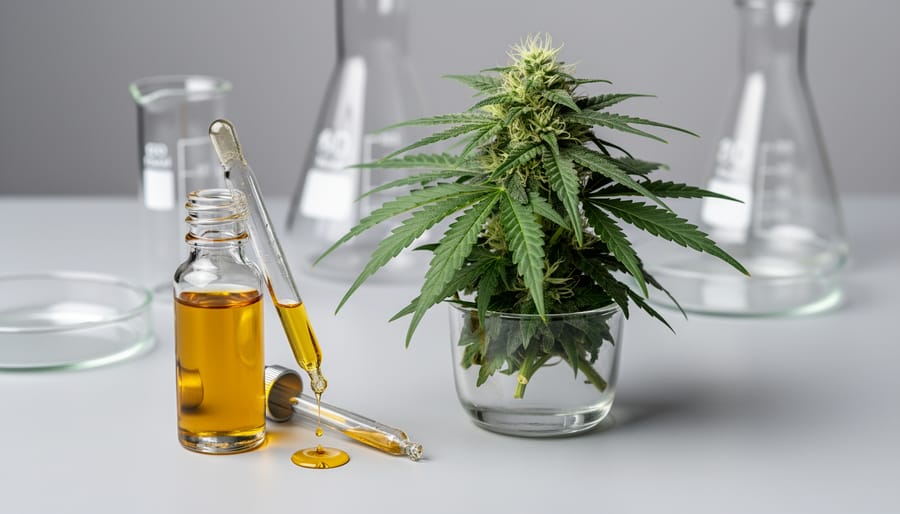
You’ve probably heard of CBD and THC, but cannabichromene (CBC) is one of those cannabinoids that’s been quietly waiting in the wings for its moment. Like CBD, CBC is one of the major cannabinoids found naturally in cannabis plants, though it’s typically present in smaller amounts than its more famous cousins.
Here’s what makes CBC interesting: it’s completely non-intoxicating. You won’t get high from CBC, no matter how much you take. It comes from the same parent molecule as CBD and THC (cannabigerolic acid, or CBGA), but as the cannabis plant matures, enzymes guide CBGA down different pathways. Some becomes CBD, some becomes THC, and some becomes CBC.
The extraction process for CBC is similar to how CBD is derived. Manufacturers extract it from hemp or cannabis plants, often alongside other cannabinoids. That’s actually why you’ll rarely find pure CBC products on the market. Most CBC gummies combine it with other cannabinoids like CBD, THC, or CBG, which brings us to how these compounds might work better together than alone.
CBC interacts with your body’s endocannabinoid system, but it does so differently than CBD. While CBD primarily influences receptors indirectly, preliminary research suggests CBC may work through different pathways entirely. Scientists are still figuring out the specifics, but early studies hint at CBC having its own unique properties that could complement how CBD and THC together affect the body.
Think of CBC as the ensemble player rather than the solo act. It’s been in cannabis all along, doing its thing quietly in the background. Now that extraction and testing methods have improved, we’re finally able to isolate and study it properly, which is why CBC gummies are just starting to appear on shelves in 2026.
How CBC Differs From CBD (And Why It Matters)
When I first started digging into CBC, I expected it to be basically CBD’s cousin, similar benefits, same vibe, just less famous. Turns out, these two cannabinoids are more like siblings with totally different personalities.
Both CBC and CBD are non-intoxicating cannabinoids found naturally in cannabis plants, and neither will get you high. They both interact with your body’s endocannabinoid system, that network of receptors that helps regulate everything from mood to inflammation. But here’s where it gets interesting: they don’t work the same way once they’re in your system.
CBD primarily interacts with your CB1 and CB2 receptors indirectly, which is part of why the latest CBD research has explored its potential for everyday wellness support. CBC, on the other hand, appears to bind more readily with other receptors in your body, particularly TRPV1 and TRPA1 receptors, which are involved in how we perceive pain and inflammation. It’s like they’re taking different routes through the same neighbourhood.
| Cannabinoid | Intoxicating? | Research Interest Areas | Typical Product Forms |
|---|---|---|---|
| CBD | No | Everyday wellness, discomfort, relaxation | Oils, gummies, topicals, vapes |
| CBC | No | Inflammation pathways, mood support | Blended gummies, oils (rarely isolated) |
| THC | Yes | Pain relief, euphoria, appetite | Edibles, vapes, flower |
The preliminary research on CBC is genuinely intriguing, even if we’re still in the early stages. Some studies suggest CBC may support neurogenesis, the creation of new brain cells, and could have unique anti-inflammatory properties that work differently than CBD’s mechanisms. I’m cautious about overhyping these findings since much of the research is still preclinical, but it explains why some users are actively seeking out CBC products.
What really matters for most people: if you’ve tried CBD and felt it wasn’t quite hitting the mark, CBC might offer a different angle. Some folks report that CBC blends feel more mood-lifting or mentally clarifying compared to CBD alone, though individual experiences vary wildly. It’s not that one is better, they’re just different tools, and some bodies respond more enthusiastically to one than the other.
The catch? Pure CBC products are rare. Most CBC gummies you’ll find combine it with CBD, THC, or other cannabinoids, which actually might be a good thing given what we know about the entourage effect. But it does make isolating CBC’s specific effects trickier for the average user.
The Entourage Effect: Why CBC Gummies Are Often Blends
If you’re wondering why you can’t just buy a pure CBC gummy, you’re not alone, I had the same question when I started researching these products. The answer comes down to something called the entourage effect, and it’s actually why many brands are making blends rather than isolating CBC on its own.
The entourage effect is the idea that cannabinoids work better together than they do individually. Think of it like a band: each musician is skilled on their own, but when they play together, the music becomes richer and more complex. The same principle applies here. When CBC, CBD, CBG, THC, and other cannabis compounds interact in your system, they can enhance or balance each other’s effects in ways that a single cannabinoid might not achieve alone.
That’s why most CBC gummies you’ll find are actually multi-cannabinoid blends. Wyld’s Blood Orange gummies, for example, pair 10mg of THC with 10mg of CBC in a 1:1 ratio. Their Grapefruit Sativa Enhanced takes it further with a 1:1:1 combination of THC, CBC, and CBG. You’ll also see products like the THC+CBC Mango Lime gummies that pack 10mg of THC and 30mg of CBC per pack, creating different ratio profiles for different experiences.
This blending approach makes sense for a few reasons. First, there’s still limited standalone research on CBC, so combining it with better-understood cannabinoids like CBD or CBG gives users a more predictable foundation. Second, many people report that combination products deliver a more well-rounded experience, the entourage effect in action. And honestly? If you’re already familiar with CBD or THC products, a blend gives you something recognizable to anchor the experience while you explore what CBC might add to the mix.
The downside is that it’s harder to isolate exactly what CBC is contributing versus the other cannabinoids in the blend. But for most people trying these products, that combined effect is actually the whole point.
CBC Gummies on the Market: What’s Actually Available in 2026
When I started looking into actual CBC gummy products available right now, I discovered a market that’s definitely in its early days but already showing some interesting options. Unlike the extensive selection you’ll find with best CBD gummies CBC gummies are currently available primarily as part of cannabinoid blend formulations rather than standalone CBC products.
The most prominent brand I came across is Wyld, which has introduced a couple of CBC-focused formulations. Their Blood Orange gummies offer a 1:1 THC:CBC ratio at 10mg of each cannabinoid per gummy. That’s a balanced approach that pairs the emerging properties of CBC with the more familiar effects of THC. They’ve also created Grapefruit Sativa Enhanced gummies featuring a 1:1:1 ratio of THC:CBC:CBG, which essentially brings three cannabinoids together in equal measure for a potential entourage effect. It’s the kind of formulation that reflects how brands are experimenting with CBC as part of broader cannabinoid profiles rather than isolating it completely.
I also found THC+CBC Mango Lime Gummies on the market, which take a different approach with 10mg of THC and 30mg of CBC per pack. That’s a notably higher CBC concentration relative to the THC content, positioning CBC as the dominant cannabinoid in the blend.
| Product Name | Cannabinoid Ratio | Per Gummy | Notable Features |
|---|---|---|---|
| Wyld Blood Orange | 1:1 THC:CBC | 10mg:10mg | Balanced THC/CBC pairing |
| Wyld Grapefruit Sativa Enhanced | 1:1:1 THC:CBC:CBG | Varies by cannabinoid | Triple-cannabinoid blend |
| THC+CBC Mango Lime | THC+CBC blend | 10mg THC + 30mg CBC (per pack) | Higher CBC concentration |
What stands out about the current CBC gummy landscape is that nearly all products combine CBC with THC, and sometimes additional cannabinoids like CBG or CBN. If you’re looking for CBC gummies without any THC, your options appear extremely limited in 2026. This reflects both the entourage effect philosophy we discussed earlier and potentially regulatory or market realities about how CBC products are being developed and sold.
The specific details around pricing, package sizes, and where exactly you can buy these products vary significantly depending on your location and local regulations. Since this is such a new category, I’d recommend checking an availability guide specific to your region before assuming any particular product will be accessible to you. The CBC gummy market is evolving quickly, and what’s available today might expand considerably even in the next few months.
What to Look for When Shopping for CBC Gummies
Shopping for CBC gummies can feel a bit like navigating uncharted territory, there aren’t as many established brands or familiar names yet compared to the CBD market. I’ve learned to approach these products with the same careful eye I’d use for any cannabinoid purchase, but with extra attention to a few specific details.
Start by examining the cannabinoid ratios listed on the label. CBC rarely appears alone in gummies; most products blend it with THC, CBD, CBG, or CBN to create specific effects. A 1:1 THC:CBC ratio will produce a very different experience than a product with 30mg CBC and only 10mg THC. Think about your goals: if you’re interested in CBC’s potential properties without significant psychoactive effects, look for formulations where CBC is the dominant cannabinoid or paired equally with CBD. If you’re comfortable with THC and want to explore how these cannabinoids work together, a balanced or THC-forward blend might appeal.
Dosage matters, especially as a starting point. Products like Wyld’s offerings typically contain 10mg of each cannabinoid per gummy, which is a moderate dose for someone familiar with edibles but potentially strong for beginners. If you’re new to cannabinoids beyond CBD, consider cutting gummies in half initially or seeking lower-dose options. I always remind myself that you can take more but can’t take less once it’s consumed.
Ingredient quality deserves attention beyond just the cannabinoids. Check for natural flavourings, real fruit extracts, and minimal artificial additives. Some brands highlight organic ingredients or specific dietary accommodations like vegan formulations, which can indicate overall quality standards.
Third-party testing is non-negotiable, in my view. Reputable brands should make certificates of analysis readily available, confirming cannabinoid content and screening for contaminants like pesticides, heavy metals, and residual solvents. If a company makes it difficult to access test results, that’s a red flag.
Consider how the product aligns with your specific interests. Someone exploring options for relaxation might gravitate toward CBC blends with CBN, while those curious about daytime use might prefer formulations that include CBG. If you’ve had positive experiences with CBD and sleep a CBC blend containing both might feel like a natural next step.
Finally, start conservatively. With any emerging cannabinoid, there’s less collective experience to draw from, so give yourself time to understand how your body responds before adjusting doses or trying different ratios.
My Take: Is the CBC Gummy Trend Worth Exploring?

After spending time researching CBC gummies and digging into what’s actually out there, I’ve got to be honest, I’m cautiously optimistic about this trend, but it’s not for everyone just yet.
If you’re an experienced CBD user who’s been curious about exploring beyond the usual suspects, CBC gummies are genuinely worth a look. The entourage effect formulations, like Wyld’s Grapefruit Sativa Enhanced with that 1:1:1 THC:CBC:CBG ratio, offer something different from straight CBD products. You’re not just getting one cannabinoid doing all the work. For folks who’ve found CBD helpful but are looking for something with a bit more depth, these blends might hit differently.
For beginners, though, I’d suggest starting with plain CBD gummies first. Get familiar with how cannabinoids affect your body before jumping into multi-cannabinoid blends. The THC content in many CBC products, like those 10mg doses in Wyld’s offerings, can be significant if you’re not used to it. There’s no rush here.
What I appreciate about the current CBC gummy market is that brands seem to be taking the blend approach seriously rather than just isolating CBC and calling it revolutionary. That Mango Lime option with 10mg THC and 30mg CBC shows there’s real experimentation happening with ratios.
My biggest caution? Manage your expectations. We don’t have decades of research on CBC like we do with CBD. If you try CBC gummies, approach them as an interesting addition to your wellness routine, not a magic solution. Start with a low dose, give it time, and pay attention to how you actually feel rather than what you hope will happen. That’s the approach that’s served me well with any new cannabinoid product.
CBC gummies represent an exciting new chapter in the cannabinoid wellness space, and I’m genuinely intrigued by where this category is headed. We’re watching a cannabinoid that was largely in the background step into the spotlight, and the early product offerings show real creativity in how brands are blending CBC with CBD, CBG, and THC to create unique experiences.
If you’re curious about trying CBC gummies, I’d encourage that exploration with a measured approach. Start with a low dose, especially if you’re new to cannabinoid blends or haven’t tried products with THC ratios like the 10mg:10mg formulations we’ve discussed. Give your body time to respond, and pay attention to how you feel.
The cannabis wellness landscape keeps evolving, and what works beautifully for one person might not resonate with another. That’s not a flaw in the products or in you. It’s simply the nature of cannabinoids and individual body chemistry. Whether CBC gummies become a staple in your routine or just a curious experiment, you’re part of a community figuring out these emerging options together. Stay informed, stay safe, and remember that the best cannabis wellness journey is the one that genuinely serves your needs.