
CBD doesn’t cancel out a THC high, but it does modulate the experience. If you’ve ever felt a cannabis high veering into anxious territory and wondered whether popping a CBD gummy might bring you back down, you’re asking the right question. The short answer is that CBD can take the edge off THC’s intensity, but it won’t sober you up or erase psychoactive effects entirely.
Here’s what actually happens: CBD influences how THC interacts with your brain’s cannabinoid receptors, slightly lowering the peak intensity of the high and smoothing out the ascent to full effects. Research shows CBD can reduce some of THC’s more uncomfortable side effects, particularly anxiety and psychosis-like experiences that occasionally pop up with higher doses. Think of it less as hitting an off switch and more like adjusting the volume.
I’ve tested this myself with different CBD-to-THC ratios, and the difference is noticeable. A 1:1 ratio product feels markedly gentler than straight THC, with less mental fog and fewer jitters. That said, one well-designed study found that inhaling CBD alongside THC didn’t protect against the short-term psychoactive effects, so your mileage will vary based on timing, dosage, and your personal body chemistry.
The practical takeaway? Cannabis strains or products with higher CBD content (some contain up to 24% CBD with minimal THC) tend to produce fewer adverse effects than low-CBD, high-THC options. You can absolutely use CBD to manage an overwhelming THC experience, but expecting it to completely reverse a high sets you up for disappointment. In this article, we’ll break down the science behind how these cannabinoids interact, explore different product ratios worth trying, and give you realistic strategies for using CBD to fine-tune your cannabis experience.
What It Means for CBD to ‘Cancel Out’ THC
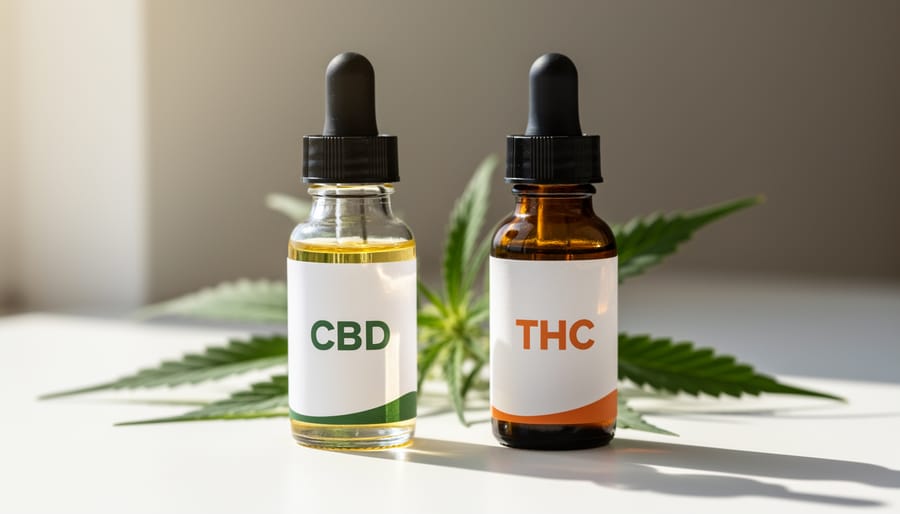
When people ask if CBD “cancels out” THC, they’re usually hoping for a magic eraser, a way to completely eliminate the psychoactive effects if they’ve consumed too much cannabis. The reality is more nuanced and honestly more interesting than a simple yes or no.
CBD doesn’t flip a switch that turns off your high. Instead, it modulates the experience, shifting the intensity and character of THC’s effects rather than wiping them away completely. Think of it less like hitting the brakes and more like adjusting the volume, you’re still listening to the same song, just at a different level. Research confirms that CBD reduces some of THC’s effects, particularly the intense anxiety or psychosis-like symptoms that can make a high uncomfortable, and it blunts some of the impairments on emotion and reward processing.
- THC High
- The psychoactive experience produced by tetrahydrocannabinol, characterized by altered perception, euphoria, and changes in cognition and sensory processing.
- CBD Modulation
- The process by which cannabidiol influences and softens THC’s effects without completely eliminating them, reducing peak intensity while maintaining therapeutic benefits.
- Entourage Effect
- The synergistic interaction between multiple cannabis compounds working together, where CBD and THC influence each other’s effects in the body.
- Psychoactive Effects
- The mind-altering experiences caused by THC, including changes in mood, perception, and consciousness that CBD can temper but not erase.
The biggest misconception I hear is that taking CBD will instantly sober you up from THC. While CBD slightly lowers the peak intensity of your high and creates a slower, smoother ascent to full effects, studies show that inhaling CBD alongside THC doesn’t protect against the short-term effects of getting high. You’ll still feel altered, just potentially less anxiously so, with a gentler curve to the experience. Cannabis with higher CBD-to-THC ratios tends to produce fewer adverse effects, but that’s different from producing no effects at all.
How CBD and THC Interact in Your System
The Peak Effect: Lower but Longer
When THC hits your system on its own, it tends to spike fast and hard, think of it as a sharp peak that can sometimes feel overwhelming. Add CBD to the mix, and that peak flattens out. You’ll still feel the effects, but they’re gentler and more gradual. Instead of a sudden rush that might catch you off guard, CBD reduces some THC effects by creating a slower, smoother climb to the full experience.
The trade-off? It takes longer to feel anything. If you’re used to THC kicking in within minutes when vaped, CBD extends that timeline. You might wait an extra five to ten minutes before the effects become noticeable, and the overall intensity stays lower throughout. This is particularly helpful if you’re prone to anxiety or paranoia, the very symptoms that can turn a pleasant high into an uncomfortable one.
Research backs this up. Studies have shown that CBD reduced anxiety-like effects and blunted some of the psychosis-like symptoms that high-THC products can trigger. It also softened impairments related to emotion and reward processing. The high becomes less of a roller coaster and more of a steady, controlled elevation, which, in my experience vaping balanced ratios, makes the whole thing far more enjoyable and functional.
What the Research Actually Shows
The science here paints a nuanced picture that challenges the simple “CBD cancels THC” narrative. Most controlled studies show that CBD does temper certain aspects of the THC experience, but it doesn’t act as a universal off-switch for getting high.
Inhaled CBD didn’t protect against the immediate psychoactive effects when consumed alongside THC in clinical settings. Participants still experienced the characteristic high, cognitive impairment, and altered perception you’d expect from THC. The onset and peak intensity weren’t significantly different when CBD was present in standard doses.
Where CBD does show measurable impact is in the quality of that high. Studies found that CBD reduced intense anxiety responses and psychosis-like effects that some people experience with THC. It also blunted certain impairments related to emotion processing and reward sensitivity, the aspects that can make a THC high feel overwhelming or uncomfortable.
The ratio matters considerably. Research suggests that cannabis with a relatively high CBD:THC ratio produces fewer adverse effects than low-ratio products. This doesn’t mean you won’t feel high; it means the experience tends toward smoother, less anxious territory. CBD modulates the rough edges rather than erasing the entire effect.
Different Types of CBD:THC Combinations
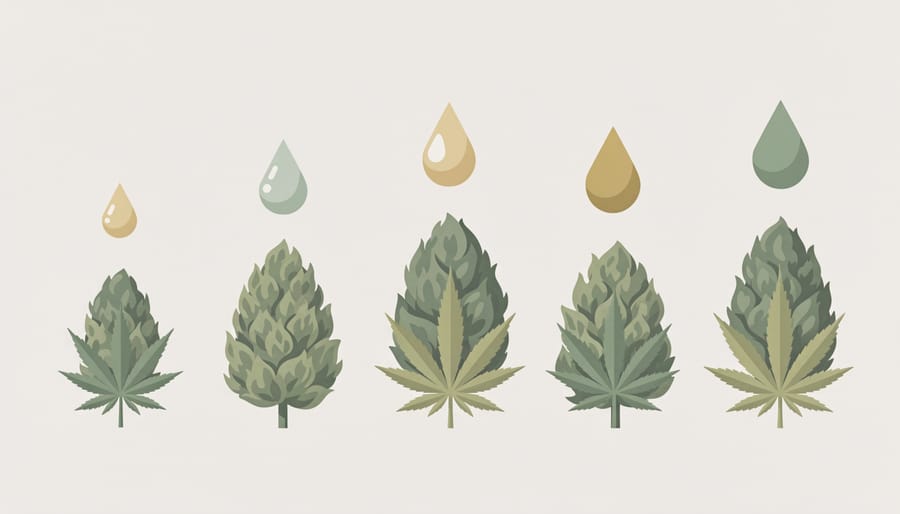
High-CBD, Low-THC Products
High-CBD, low-THC products typically contain anywhere from 10% to 24% CBD with minimal THC, often less than 1% in legal hemp-derived products, or slightly higher in medical cannabis strains specifically bred for therapeutic use without intense psychoactivity. These formulations deliver CBD’s potential calming and anti-inflammatory effects while keeping the high barely perceptible or entirely absent.
I started exploring these products when I wanted the relaxation benefits without the mental fog that comes with THC-heavy strains. What surprised me was how functional I felt, clear-headed but noticeably less tense, especially after long workdays. Products in this category include certain medical cannabis strains licensed in Canada that reach up to 24% CBD content, as well as hemp-derived options like the best CBD oil tinctures and vape cartridges designed for daytime use.
The mellowing effect is subtle but real. You won’t experience the euphoric lift or altered perception that THC provides, but you also won’t deal with the anxiety or paranoia that sometimes accompanies higher THC doses. For people new to cannabis or those managing specific symptoms like chronic pain or inflammation, high-CBD products offer a gentler entry point that still taps into the entourage effect when trace THC is present.
Balanced Ratio Products
Balanced ratio products, typically 1:1 CBD to THC or close variations like 2:1 or 1:2, sit in the sweet spot for many users who want noticeable THC effects without the intensity of THC-dominant strains. These products deliver a moderate high that feels clearer and more manageable than straight THC, thanks to CBD’s modulating influence on the peak experience.
I’ve found 1:1 vape cartridges to be surprisingly versatile: they provide enough THC for relaxation and mild euphoria, but the CBD keeps the edge off in a way that feels grounded rather than spacey. The same principle applies to edibles like CBD gummies formulated with balanced ratios, where you get therapeutic benefits alongside a controlled psychoactive experience.
The scientific backing supports this approach. Research shows that cannabis with a relatively high CBD:THC ratio is less likely to produce adverse effects like anxiety or psychosis-like symptoms compared to low-ratio products. The CBD blunts some of the impairments on emotion and reward while still letting the THC do its work, just at a smoother, more predictable level that won’t overwhelm beginners or those sensitive to THC’s stronger effects.
THC-Dominant with CBD Supplementation
I’ve experimented with this approach countless times while vaping, and it’s become my preferred method for evening sessions. When you start with a THC-dominant product, say, a strain with 18-22% THC and minimal CBD, the effects can hit hard and fast. Adding CBD into the mix, either by vaping a high-CBD strain immediately after or using a balanced vape cartridge alongside your THC-heavy one, changes the entire trajectory of the experience.
The science backs up what I’ve felt: CBD reduces some of the effects of THC, particularly those intense spikes of anxiety or mental fog that can accompany a strong THC dose. Rather than climbing to an uncomfortable peak, you get a smoother, more controlled ascent that levels off into something manageable. I’ll typically take a few draws from my THC vape, wait about five minutes, then follow up with CBD. The result isn’t a cancellation, the psychoactive effects are still present, but they’re softened around the edges, less likely to tip into paranoia or racing thoughts.
This supplementation strategy works especially well if you’ve already committed to a THC product you enjoy but occasionally find too intense.
When and How to Use CBD to Modulate THC
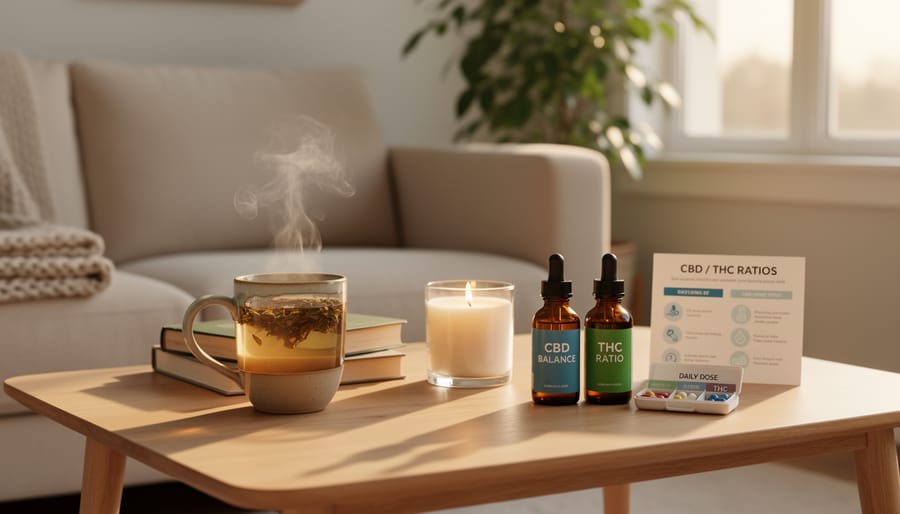
Timing Matters: Before, During, or After?
When you consume CBD matters. Taking it before THC can preemptively modulate the high, the CBD is already in your system when the THC hits, which may help prevent that initial anxious rush some people experience. I’ve found this approach useful when I know I’m reaching for a THC-heavy strain but want to keep things gentle.
Consuming CBD during your THC session offers real-time adjustment. If you’re vaping THC and start feeling too high, switching to a CBD vape can help bring things down a notch. This is where having quality best vape pens for each compound becomes practical, you can alternate without hassle. The research shows CBD reduces some effects of THC, including anxiety and emotional impairment, so mid-session dosing can genuinely help.
Using CBD after THC is about damage control or extending the experience. If you’ve overshot your comfort zone, CBD won’t instantly sober you up, inhaling CBD alongside THC doesn’t protect against the short-term high, but it can soften the edges over the following 20-30 minutes.
For newcomers still figuring out their tolerance, check out a comprehensive vaping weed guide before experimenting with timing. Start with before or during approaches, keep doses modest, and give yourself time to learn how your body responds to each method.
Finding Your Ideal Ratio
Finding the right CBD:THC ratio is personal, there’s no universal formula that works for everyone. Your ideal balance depends on your tolerance, what you’re trying to achieve, and how your body responds to each compound.
Start low with both. If you’re new to this, try a product with a high CBD ratio first, something like 10:1 or even 20:1 CBD to THC. This gives you the therapeutic benefits without much psychoactivity. From there, you can gradually increase the THC proportion until you find your sweet spot.
I’d suggest keeping a simple log for your first few weeks. Note the ratio you tried, how much you consumed, and how you felt over the next few hours. You might discover that a 4:1 ratio works perfectly for daytime focus while a 1:1 gives you the evening relaxation you want. The CBD research shows clear benefits from higher CBD ratios, but your experience is what truly matters.
Change one variable at a time, either the ratio or the amount, never both simultaneously. This helps you understand what’s actually affecting your experience. Some people feel great with balanced 1:1 products, while others prefer something more CBD-heavy like 3:1 or 5:1 to keep the high gentle.
Listen to your body, adjust gradually, and give yourself permission to experiment.
What CBD Can and Can’t Do for THC Effects
Let’s clear up the confusion around CBD and THC with some straight talk about what actually happens when you combine them.
CBD doesn’t act like a reset button for your THC experience. Instead, think of it as a volume control that turns down certain effects while leaving the core experience intact. The research backs this up, studies show that inhaling CBD alongside THC doesn’t protect against the short-term high itself, but it does reduce some of THC’s more uncomfortable edge effects. Specifically, CBD has been found to blunt anxiety, psychosis-like symptoms, and certain emotional impairments that can come with high-dose THC.
What CBD can actually do is reshape your experience into something smoother. It slightly lowers the peak intensity and extends the onset time, creating a slower climb to full effects rather than an abrupt rush. I’ve noticed this myself when vaping balanced products, the experience feels more controlled, less likely to tip into that jittery overthinking that sometimes hits with pure THC.
The ratio you choose makes a real difference here. Higher CBD:THC ratios safer in terms of adverse effects, with some medical cannabis strains containing up to 24% CBD with minimal THC designed specifically for therapeutic use without intense psychoactivity. A 2:1 or 3:1 CBD:THC product will feel fundamentally different from a THC-heavy strain, even if you add CBD afterward.
What CBD can’t do is completely sober you up or reverse the effects once THC has bound to your receptors. If you’ve consumed too much THC, adding CBD might soften the anxiety or paranoia, but you’ll still experience impairment. The modulation happens best when both compounds interact from the start, not as an emergency rescue measure.
Common Questions About CBD and THC Interaction
Does CBD counteract the effects of THC?
CBD reduces some of THC’s effects rather than counteracting them completely. Research shows that CBD can blunt anxiety, psychosis-like symptoms, and certain emotional impairments caused by THC, but it doesn’t eliminate the high itself.
Will inhaling CBD alongside THC reduce the short-term high?
No, studies found that inhaling CBD at the same time as THC did not protect against the short-term effects of the THC high. CBD modulates the experience by lowering the peak intensity and creating a slower ascent, but you’ll still feel psychoactive effects.
Do higher CBD:THC ratios reduce adverse effects?
Yes, cannabis with a relatively high CBD:THC ratio is less likely to cause adverse effects than products with low CBD content. The more CBD present relative to THC, the gentler and more controlled the experience tends to be.
Will CBD completely sober me up from THC?
No. CBD isn’t a reset button for THC intoxication, it won’t snap you back to baseline if you’ve consumed too much. What it can do is take the edge off the anxiety or intensity, making an uncomfortable high slightly more manageable.
These questions come up constantly in forums and vape shops, and I get why there’s confusion. The language around CBD “canceling out” THC sets up unrealistic expectations. When someone asks me if they can use CBD to reverse a too-strong edible experience, I’m honest: it might help smooth things out, but you’re not going to suddenly feel stone-cold sober.
The timing question is particularly tricky. A lot of people assume that if they vape CBD right before or during THC consumption, they’ll dodge the high entirely. The research is clear that this doesn’t work, inhaling both together won’t shield you from THC’s psychoactive punch. What I’ve found personally is that having CBD in your system can make the overall arc of the experience gentler, but it won’t block the initial lift-off.
One thing that does matter is the ratio you’re working with. If you’re using a product with substantial CBD content, say, something approaching the 24% CBD strains available through some medical cannabis programs, you’re going to have a fundamentally different experience than hitting pure THC with a tiny CBD chaser. The difference between a 1:20 CBD:THC ratio and a 1:1 ratio isn’t subtle.
I’ve also noticed people overestimate how much CBD they need. There’s this assumption that more is always better, but the modulating effect seems to plateau. You don’t need heroic doses, you need the right proportion relative to your THC intake, and that’s something you figure out through careful experimentation, not guesswork.
How Does Cbd Cancel Out Thc High Works
When you consume THC and CBD together, the two compounds compete for attention at the same receptor sites in your brain, specifically, your CB1 receptors. THC binds directly to these receptors, triggering the psychoactive effects you know as a high. CBD, however, takes a different approach. It doesn’t bind strongly to CB1 receptors. Instead, it acts as what researchers call a “negative allosteric modulator,” which is a fancy way of saying it changes the shape of the receptor slightly, making it harder for THC to lock in and activate it fully.
This interference creates the modulation effect. CBD blunts some of THC’s intensity by reducing how efficiently THC can stimulate your CB1 receptors. The result is a lower peak high that arrives more gradually. You still feel THC’s effects, but the climb is smoother and the summit less overwhelming.
CBD also works on other receptor systems beyond CB1, including serotonin receptors that influence anxiety and mood. This broader activity helps explain why CBD reduces the intense anxiety or psychosis-like effects some people experience with THC. It’s not blocking the high, it’s reshaping the overall experience by dampening the edges while leaving the core effects intact.
So, does CBD cancel out the THC high? Not exactly, but it does reshape the experience in meaningful ways. The science is clear: CBD modulates THC’s effects rather than eliminating them. You’ll still feel the psychoactive effects, but CBD can soften the peak intensity, smooth out the onset, and reduce some of the anxiety or discomfort that sometimes comes with higher THC doses. It’s less about cancellation and more about creating a different kind of high, one that many users find more manageable and enjoyable.
The key takeaway is that cannabis with higher CBD:THC ratios tends to produce fewer adverse effects than low-ratio products. Whether you’re reaching for a balanced 1:1 product, a high-CBD strain with minimal THC, or adding CBD to your usual THC routine, the ratio you choose will shape your experience. There’s no universal perfect combination because everyone’s endocannabinoid system responds differently.
My own journey with CBD and THC has taught me that experimentation is essential. I started adding CBD to my vaping sessions after a few uncomfortably intense THC experiences, and the difference was noticeable within days. The high became something I could settle into rather than something that occasionally overwhelmed me. Your ideal ratio might be completely different from mine, and that’s fine.
Start low, go slow, and pay attention to how different products and ratios affect you. Keep notes if it helps. The relationship between these two cannabinoids is nuanced and personal, but once you find your sweet spot, the benefits can be substantial.