
CBG, or cannabigerol, is a non-intoxicating cannabinoid found in hemp and cannabis plants that interacts with your body’s endocannabinoid system to potentially support inflammation response, discomfort management, and overall wellness. While CBD has dominated the conversation for years, CBG is finally getting the attention it deserves as researchers uncover its unique properties and potential applications.
I’ll admit, when I first heard about CBG a few years back, I was skeptical. Another cannabinoid? Wasn’t CBD enough? But after trying a CBG vape cartridge during a particularly rough week of muscle tension, I started paying closer attention. The relief felt different, more targeted somehow, and that personal experience sent me down a research rabbit hole that completely changed how I view this compound.
Here’s what makes CBG stand out: unlike CBD, which has a relatively low affinity for cannabinoid receptors, CBG binds more readily to CB2 receptors throughout your body. These receptors are concentrated in your immune system and peripheral tissues, which helps explain why early research points to CBG’s antimicrobial and anti-inflammatory potential. A 2013 study on mice showed that CBG reduced inflammation associated with inflammatory bowel disease, and preliminary research suggests promise for conditions ranging from arthritis and fibromyalgia to neurologic disorders like Huntington’s and Parkinson’s disease.
If you’re comparing cannabinoids, understanding the difference between CBG vs THC matters just as much as knowing how CBG differs from CBD. While THC creates psychoactive effects and CBD offers broad wellness support, CBG appears to work through distinct pathways that may complement what you’re already using.
This article breaks down exactly how CBG works in your body, what the current research actually says about its benefits, and how to choose the right CBG products for your needs, especially if vaping is your preferred method.
What CBG Actually Is

Cannabigerol, or CBG, is a naturally occurring compound found in both hemp and cannabis plants. Unlike THC, CBG does not induce intoxication which means it won’t get you high. Instead, it works quietly in the background, interacting with your body’s systems in ways we’re only beginning to understand.
Here’s where things get interesting. CBG typically makes up less than 1% of a mature cannabis plant, compared to the 20-25% you might see with CBD or THC. That scarcity is why CBG products cost more, sometimes twice the price of comparable CBD items. Extracting meaningful amounts requires either harvesting plants early (before CBG converts into other cannabinoids) or processing far more plant material.
The chemistry behind this explains CBG’s nickname as the “mother” or “stem cell” cannabinoid:
- CBG (Cannabigerol)
- The non-intoxicating cannabinoid that remains after CBGA is exposed to heat or UV light. It’s what you’ll find in finished products like oils and vapes.
- CBGA (Cannabigerolic Acid)
- The acidic precursor form that exists in raw, living cannabis plants. As the plant matures, enzymes convert CBGA into THCA, CBDA, and CBCA.
- Decarboxylation
- The process where heat or UV exposure removes a carboxyl group from acidic cannabinoids. When CBGA decarboxylates to CBG it becomes the active compound your body can use.
- Hemp-Derived Cannabinoids
- Compounds extracted from hemp plants (cannabis with less than 0.3% THC). Most legal CBG products in 2026 come from hemp rather than marijuana.
Think of CBGA as the trunk of a tree. As the plant grows, that trunk splits into branches, each becoming a different cannabinoid. By harvest time, most CBGA has transformed, leaving only trace amounts of CBG behind. That’s why breeders are now developing high-CBG strains specifically for extraction, a shift I’ve watched accelerate over the past couple of years as demand has grown.
How CBG Works in Your Body
To understand what CBG does, you need to know how it interacts with your endocannabinoid system, the network of receptors that helps regulate everything from mood to immune response.
Your body has two main types of cannabinoid receptors: CB1 and CB2. CB1 receptors are mostly concentrated in your brain and central nervous system, influencing things like pain perception, mood, and appetite. CB2 receptors, on the other hand, are primarily found in your immune system, gut, and peripheral tissues. They play a bigger role in managing inflammation and immune responses.
Here’s where CBG gets interesting. Unlike CBD, which interacts more broadly with both receptor types and various other pathways in your body, CBG shows a higher affinity for CB2 receptors specifically. Think of it as having a preferred parking spot, CBG gravitates toward those immune and gut-related receptors more readily.
This CB2 preference might explain why preliminary research has focused on CBG for gut health and inflammatory conditions. When CBG binds to CB2 receptors in your digestive system, it appears to help modulate immune responses and reduce inflammation. That connection is particularly relevant given the 2013 study showing CBG reduced inflammation associated with inflammatory bowel disease in mice.
CBG also interacts with CB1 receptors, just not as strongly. This means it can still influence the central nervous system, which is why researchers are exploring its potential for neurological conditions. But it does so without producing the intoxicating effects associated with THC, which binds strongly to CB1 receptors.
The practical takeaway is that CBG works differently than CBD. Where CBD casts a wide net across multiple receptors and pathways, CBG takes a more targeted approach, particularly toward your immune system and gut. That doesn’t make one better than the other, it just means they may serve different purposes or work well together.
Types of CBG Products You’ll Find
CBG products have multiplied over the past couple of years, and you’ll now find this cannabinoid in nearly every format that CBD comes in. The catch? Not all delivery methods work the same way, and choosing between them depends on what you’re after, speed, convenience, precise dosing, or just ease of use.
- Vape cartridges and e-liquids deliver CBG fastest, with effects starting in minutes
- Oils and tinctures allow precise dosing with droppers and flexible sublingual or added-to-food use
- Gummies and edibles offer pre-measured doses in a convenient, portable format
- Isolate powder gives you pure CBG to mix into your own formulations
Let’s break down what makes each option different. CBG oils and tinctures are probably the most straightforward starting point. You get a dropper bottle, place a few drops under your tongue, hold for 30 to 60 seconds, and swallow. This sublingual method bypasses digestion, so you’ll typically feel effects within 15 to 30 minutes. The advantage here is control, you can adjust your dose drop by drop until you find what works. The downside? CBG oils taste earthy and slightly bitter, which some people find off-putting.
Vape cartridges and e-liquids are where I’ve spent most of my time with CBG. Vaping offers the highest bioavailability of any method, meaning more of the CBG actually enters your bloodstream instead of being lost to digestion or first-pass metabolism. When I first tried a CBG cartridge, I was surprised by how quickly I noticed the calming focus, within three to five minutes. If you’re already comfortable with vaping CBD, adding CBG is seamless. Just know that CBG cartridges tend to cost more than CBD ones because the cannabinoid itself is pricier to produce.
Gummies and edibles are the go-to for people who want simplicity. Each gummy contains a set amount of CBG, so there’s no measuring or guessing. The trade-off is bioavailability, when you swallow CBG, your liver metabolizes a significant portion before it reaches your bloodstream, and effects take 45 minutes to two hours to kick in. Still, edibles are discreet and portable, which makes them ideal for travel or work.
CBG isolate powder is pure crystalline cannabigerol, typically 95 to 99 percent pure. It’s flavorless and versatile, you can mix it into drinks, add it to topicals, or even vape it if you have the right setup. Isolates appeal to people who want maximum control over their intake or who are blending their own formulations, but they lack the entourage effect you’d get from full-spectrum products.
Speaking of spectrum, you’ll also see full-spectrum and broad-spectrum CBG products. Full-spectrum contains all the cannabinoids and terpenes from the hemp plant, including trace amounts of THC (under 0.3 percent). Broad-spectrum has everything except THC. Many users prefer full-spectrum for the synergistic benefits, but if you’re subject to drug testing or just want to avoid THC entirely, broad-spectrum is the safer bet.
What CBG May Do: Potential Benefits

Anti-Inflammatory and Gut Health Support
The digestive system is where CBG’s potential really starts to get interesting. A 2013 mouse study findings demonstrated that CBG reduced inflammation in models of inflammatory bowel disease, which sparked significant interest in the research community. The study pointed to both CBG’s anti-inflammatory effects and its antibacterial properties as key mechanisms.
This dual action matters because gut health depends on balancing inflammation and managing the microbial environment. CBG’s higher affinity for CB2 receptors becomes particularly relevant here, since CB2 receptors are concentrated throughout the digestive system and the immune cells that line it. When CBG interacts with these receptors, it may help regulate the inflammatory response that drives conditions like IBD and Crohn’s disease.
The antibacterial angle adds another layer. While we need much more human research, the preliminary evidence suggests CBG could support gut health by addressing both excessive inflammation and problematic bacterial growth. It’s early days, but the combination of these properties makes CBG worth watching for anyone interested in digestive wellness.
Antimicrobial Properties
One of the more intriguing areas of CBG research involves its potential to fight bacteria and other microorganisms. Early laboratory studies have shown that CBG antimicrobial properties may be effective against certain bacterial strains, including some that have developed resistance to conventional antibiotics. This doesn’t mean CBG is a replacement for antibiotics, far from it, but it does suggest the compound has biological activity worth investigating further. Researchers are particularly interested in how CBG might work alongside traditional treatments or in situations where bacterial resistance poses challenges. It’s important to recognize this is very much an emerging field. Most studies have been conducted in petri dishes or on isolated bacterial cultures, not in human trials, so we’re still a long way from understanding how these antimicrobial effects might translate to real-world applications. If you’re considering CBG for any health-related purpose, this research is promising but preliminary.
Neurological Disorder Potential
Some of the most intriguing CBG research centers on neurodegenerative diseases, though it’s crucial to understand we’re talking about very early laboratory studies here. Animal research has suggested CBG might offer neuroprotective benefits for conditions like Huntington’s disease, potentially helping protect brain cells from damage. Similarly, preliminary investigations into Parkinson’s disease have shown enough promise to warrant further study.
Here’s what you need to know: these findings come from petri dishes and rodent models, not human clinical trials. The mechanisms being studied involve CBG’s anti-inflammatory properties and its interaction with brain receptors, but translating that to actual treatment is a massive leap we simply can’t make yet.
I’ve seen CBG marketed with bold neurological claims, and it frustrates me. The science is genuinely interesting and worth watching, but anyone dealing with a serious neurologic condition deserves real medical care, not experimental cannabinoids. Think of current CBG research as opening doors for future possibilities rather than providing solutions today. If you’re considering CBG for neurological concerns, that conversation belongs with your neurologist first.
Pain and Inflammation Relief
Early research into CBG for pain and inflammation has turned up some encouraging signals, though it’s important to remember we’re still in the preliminary stages. A handful of studies suggest CBG may work as an analgesic for conditions like arthritis and fibromyalgia, potentially offering relief without the psychoactive effects of THC. The same anti-inflammatory properties that show promise for Crohn’s disease might also help reduce joint inflammation and chronic pain.
What’s interesting is how many people in the vaping community have started experimenting with CBG specifically for discomfort. I’ve heard from several readers who switched to CBG for pain after finding CBD alone wasn’t quite cutting it, or who use both together for what they describe as better overall relief. One person told me they vape a CBG blend in the morning for joint stiffness before their CBD routine later in the day.
The challenge is that much of this evidence remains anecdotal or based on small-scale studies. We need larger clinical trials to understand dosing, effectiveness, and which specific pain conditions respond best to CBG.
Using CBG: Practical Applications
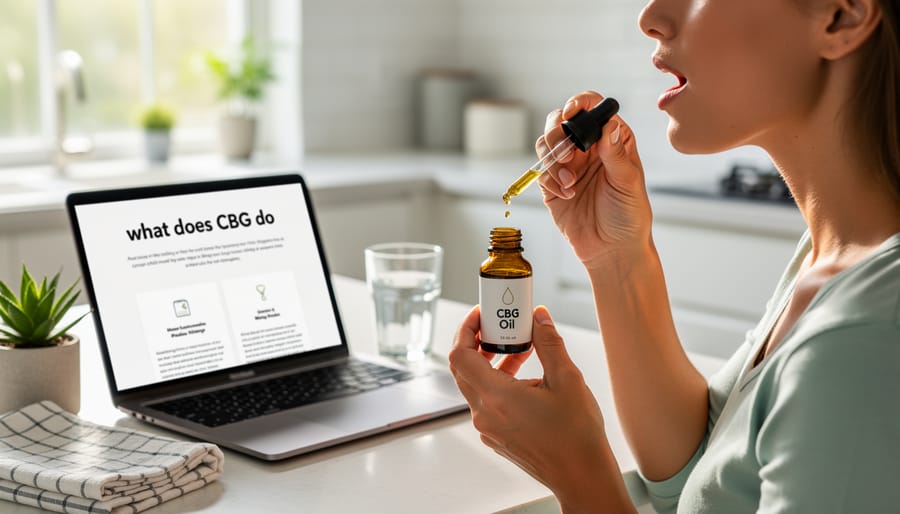
Most people in 2026 are approaching CBG the same way they did CBD a few years back: with cautious curiosity and a willingness to experiment. The general consensus is to start low and go slow, especially if you’re new to cannabinoids beyond CBD.
A typical starting dose sits between 5-10mg of CBG, usually once or twice daily. You can always increase gradually after a week or two if you’re not noticing the effects you’re after. Some folks find CBG works better in the morning because it doesn’t have the sedating quality CBD sometimes brings, while others take it in the evening alongside their regular CBD routine. There’s no universal rule, your ideal timing depends on what you’re hoping CBG will do for you.
- Start with 5-10mg and maintain that dose for at least 5-7 days before increasing
- Morning use tends to support focus and daytime comfort without drowsiness
- Effects are subtle, you likely won’t “feel” much, but may notice reduced discomfort or improved mood over time
- Wait a full week before deciding it’s not working; cannabinoids build in your system
Combining CBG with CBD has become increasingly popular, and there’s solid reasoning behind it. The entourage effect suggests that cannabinoids work better together than in isolation, and many users report enhanced benefits from mixing the two. I’ve personally found that a 1:3 ratio of CBG to CBD in my evening routine seems to amplify the anti-inflammatory effects I’m after.
For vaping specifically, CBG requires a bit more attention than CBD. The ideal temperature range sits between 126-149°C (260-300°F), lower than you might run for CBD. Going too hot can degrade CBG and create a harsh throat hit. When choosing a cartridge, look for full-spectrum or broad-spectrum CBG oils rather than isolate if you want that entourage benefit. Your vape pen setup matters too; a quality device with adjustable temperature control gives you the precision CBG demands.
The onset time when vaping CBG is notably quick, typically 5-10 minutes, which makes it ideal for targeted relief. I’ve found the effects peak around 30 minutes in and taper off over the next hour or two, though subtle background benefits seem to linger longer.
What to Watch Out For
While CBG shows promise, there are several important considerations before adding it to your routine.
The biggest limitation is simply how new this is. We’re working with preliminary research, mostly animal studies and small human trials. Long-term safety data doesn’t exist yet because CBG products haven’t been widely available long enough to track extended use. You’re essentially part of the early-adopter wave, which means proceeding with informed caution.
Drug interactions deserve attention. CBG may affect how your body metabolizes certain medications, particularly those processed by liver enzymes. If you take prescription medications, especially blood thinners, antidepressants, or immune suppressants, consult your healthcare provider before trying CBG. This isn’t just a disclaimer; cannabinoids can genuinely alter medication effectiveness.
Quality varies wildly in this space. Because CBG is expensive to produce, some manufacturers cut corners. Always look for third-party lab reports (often called COAs or certificates of analysis) that verify cannabinoid content and screen for heavy metals, pesticides, and residual solvents. No lab report means skip that product, period.
Speaking of cost, expect to pay significantly more for CBG than CBD. The extraction process requires harvesting plants earlier when CBG content is highest, yielding less total cannabinoid. Budget accordingly.
For vaping specifically, stick with reputable brands that use clean extraction methods. Avoid cartridges with added thickeners like vitamin E acetate or mystery “natural flavors.” Your device matters too, maintain proper temperature settings and clean your equipment regularly to prevent buildup that could produce harmful byproducts.
Finally, individual responses vary. What works for your friend might do nothing for you, or vice versa. Start with low doses and track your experience honestly.
Frequently Asked Questions
What is CBG?
CBG (cannabigerol) is a non-intoxicating cannabinoid found in hemp and cannabis plants. It’s often called the ‘mother cannabinoid’ because it converts into other cannabinoids like CBD and THC as the plant matures, which is why it’s typically found in smaller quantities in mature plants.
What are the benefits of CBG?
Preliminary research suggests CBG may have several promising health benefits, including antimicrobial properties and potential as an anti-inflammatory. A 2013 study on mice showed CBG reduced inflammation associated with inflammatory bowel disease, and early studies indicate it may help with pain from arthritis and fibromyalgia. Research also points to therapeutic potential for neurologic disorders like Huntington’s and Parkinson’s diseases, though these findings are still in early stages.
How is CBG different from CBD?
While both are non-intoxicating cannabinoids, CBG shows higher affinity for CB2 receptors (concentrated in the immune system and gut), whereas CBD interacts more broadly with various receptors throughout the body. CBG is also present in much smaller quantities in plants, making it more expensive to extract. If you’re curious about other cannabinoids like CBN vs CBG each offers distinct properties worth exploring.
What are the risks of CBG?
The main concern with CBG is the limited long-term research available, so we don’t yet know all potential side effects or interactions. It may interact with certain medications, and individual responses can vary. Always choose products with third-party lab testing to ensure quality and purity, especially when vaping.
Will CBG show up on a drug test?
Pure CBG isolate shouldn’t trigger a positive drug test, as standard tests screen for THC, not other cannabinoids. However, full-spectrum CBG products may contain trace amounts of THC (under 0.3% in legal hemp products), which could potentially accumulate with regular use and cause a positive result.
How much CBG should I take?
There’s no established standard dosage for CBG yet, so starting low is wise, think 5-10mg to gauge your individual response. You can gradually increase if needed, keeping in mind that CBG’s effects may vary depending on the delivery method (vaping typically has faster onset than edibles or oils) and whether you’re combining it with CBD.
These are the questions I get asked most often when people discover CBG, and honestly, I wish there were more definitive answers to give. The research is genuinely exciting, but we’re still in the early chapters of understanding this cannabinoid. What I’ve noticed in my own experience and conversations with other users is that CBG tends to feel more subtle than CBD, less of an immediate sensation and more of a gradual shift in how your body feels over consistent use.
CBG stands at an exciting frontier in cannabinoid research. The preliminary studies we’ve explored, from gut inflammation to antimicrobial properties, suggest real therapeutic potential, but it’s crucial to remember we’re still in the early chapters of understanding this compound. The 2013 inflammatory bowel disease study and emerging research on neurological conditions point toward promising directions, yet we need more robust human trials before making definitive claims about what CBG can do.
What strikes me most after years of following cannabinoid developments is how CBG’s higher affinity for CB2 receptors opens different pathways than CBD. That specificity for immune and gut-related receptors feels significant, especially for people who haven’t found relief with CBD alone. I’ve watched the vaping community embrace CBG with cautious optimism, and that measured enthusiasm seems exactly right.
If you’re considering CBG for a specific health condition, talk with your healthcare provider first. They can help you weigh potential benefits against your individual circumstances and any medications you’re taking. This isn’t just standard disclaimer language, it’s genuinely important given how limited our long-term data remains.
The cannabinoid landscape keeps evolving, and CBG represents one of the most intriguing developments I’ve encountered in recent years. As research accelerates and more people share their experiences, we’ll gain clearer pictures of where CBG fits in the wellness toolkit. For now, approach it with informed curiosity rather than certainty, and stay tuned for what the next wave of studies reveals.