
Vaping CBD hemp oil ethically means choosing products grown without harmful pesticides, extracted using clean methods, and sold by companies that treat workers fairly and protect the environment. When you make this choice, you’re supporting sustainable farming practices, ensuring what you inhale is free from contaminants, and voting with your wallet for a vaping industry that prioritizes people and planet over pure profit.
I’ll be honest: three years into my own CBD vaping journey, I wish someone had explained this to me from the start. I spent my first year chasing the cheapest options online, wondering why some cartridges left me feeling off while others delivered the calm focus I was looking for. Turns out, the difference wasn’t just in my head. The quality of the hemp, the extraction process, and even the packaging materials all matter when you’re dealing with something you’re putting directly into your lungs.
The good news? Ethical CBD vaping isn’t about perfection or breaking the bank. It’s about knowing what questions to ask and which red flags to watch for. You don’t need a chemistry degree to understand why CBD won’t get you high or to spot the difference between a company genuinely committed to quality and one just slapping “organic” on the label for marketing points.
This guide walks you through everything from soil health to supply chain transparency, giving you the practical tools to make confident choices that align with your values.
What Makes CBD Hemp Oil Vaping Ethical?
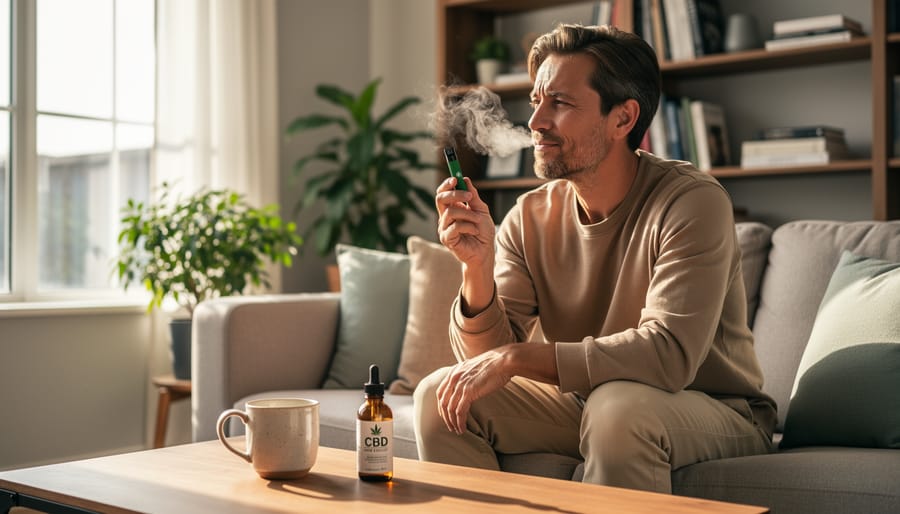
Ethical vaping isn’t just about choosing products that work, it’s about understanding the full picture of what you’re consuming and how it got to you. When we talk about ethics in CBD hemp oil vaping, we’re looking at practices that prioritize your health, respect the environment, and treat everyone in the supply chain fairly.
At its core, ethical vaping means making choices based on transparency and quality. You deserve to know exactly what’s in your vape oil, where the hemp came from, how it was processed, and whether the final product is actually safe. This matters because what you inhale goes directly into your bloodstream, bypassing many of your body’s natural filters. The standards applied to your CBD vape oil directly affect your wellbeing.
- Transparency
- When companies openly share information about their sourcing, processing methods, and test results without you having to dig for it.
- Sustainability
- Farming and production practices that minimize environmental harm and can continue long-term without depleting natural resources.
- Third-Party Testing
- Independent laboratory analysis that verifies product safety, potency, and purity beyond what the manufacturer claims.
- Organic Certification
- Official verification that hemp was grown without synthetic pesticides, herbicides, or fertilizers that could end up in your vape oil.
- Fair Labor Practices
- Ensuring workers throughout the supply chain receive fair wages and safe working conditions.
But ethical vaping extends beyond personal health considerations. The choices we make as consumers influence how the entire CBD industry operates. When you support brands committed to sustainable farming, you’re voting for agricultural practices that protect soil health and water quality. When you choose companies that test rigorously, you’re reinforcing the message that quality and safety should be industry standards, not optional extras.
Social responsibility matters too. The CBD industry employs thousands of people, from farmers to lab technicians to retail workers. Ethical brands ensure these individuals work in safe conditions and receive fair compensation. They invest in their communities rather than just extracting profits.
The beautiful thing about ethical vaping is that these factors often overlap. Brands genuinely committed to quality tend to care about all these aspects, they understand that cutting corners in one area often means cutting them elsewhere. When you find a company that prioritizes transparency, you typically discover they also value sustainability and fair treatment of workers.
Source Matters: Understanding Hemp Cultivation Ethics
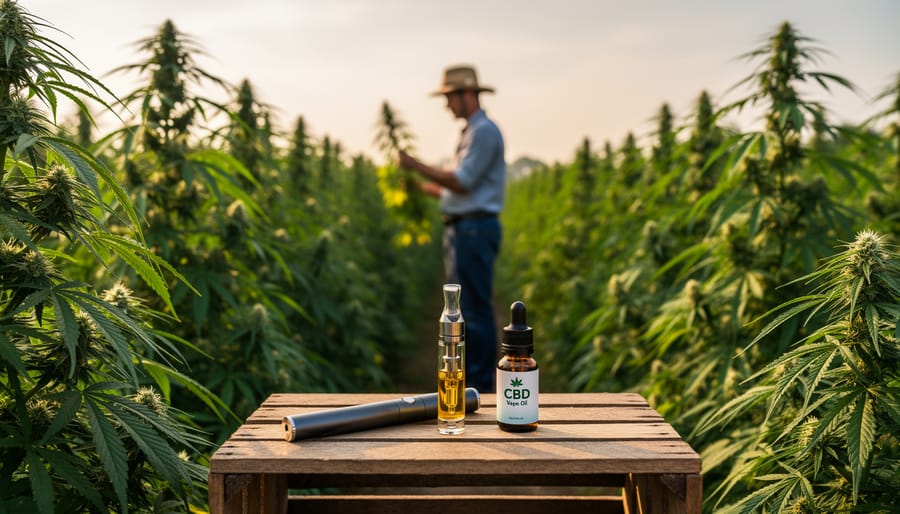
Why Organic Hemp Makes a Difference
Hemp plants are incredibly efficient at pulling whatever’s in the soil straight into their tissues, good and bad. Think of them as nature’s sponges. When hemp grows in soil contaminated with heavy metals, pesticides, or other pollutants, those substances concentrate in the plant material that eventually becomes your vape oil.
This is where organic certification becomes your safety net. Organically grown hemp comes from soil that’s been verified free of synthetic pesticides, herbicides, and fertilizers. The certification process means someone’s actually checked that the growing conditions meet strict standards. You’re not just taking the company’s word for it.
I learned this distinction matters when comparing lab reports from different brands. The conventional hemp products showed trace amounts of compounds I definitely didn’t want in my lungs. The organic options? Cleaner across the board.
Organic certification costs farmers more, soil testing, compliance fees, the works. But that investment translates directly to what you’re inhaling. When you’re choosing a CBD vape oil, look for USDA Organic certification or equivalent standards from reputable certifying bodies. It’s the clearest signal that the hemp was grown in conditions designed to keep contaminants out of your product from the very beginning.
Regenerative Agriculture and Your Vape Oil
Regenerative agriculture takes sustainable farming a step further. Instead of simply avoiding harm, these practices actively improve soil health, capture carbon from the atmosphere, and restore ecosystems. Some forward-thinking CBD companies now source hemp from regenerative farms that use techniques like cover cropping, minimal tilling, and rotating hemp with other crops.
Why does this matter for your vape oil? Healthier soil produces more robust hemp plants with better nutrient profiles. Regenerative practices also reduce the need for synthetic inputs that could end up in your product. Plus, these farms help combat climate change by turning agricultural land into carbon sinks.
Identifying regenerative brands takes a bit of digging. Look for companies that explicitly mention regenerative agriculture on their websites or packaging. Some brands partner with specific regenerative farms and share details about these relationships. Third-party certifications like Regenerative Organic Certified exist, though they’re still relatively new in the hemp industry.
Don’t expect every brand to use regenerative hemp yet. It’s an emerging practice that requires significant investment and commitment. But supporting companies that do helps drive the entire industry in a more sustainable direction.
Extraction Methods: The Ethics Behind Processing
I learned about extraction methods the hard way. A few years back, I switched to what seemed like a cheaper CBD vape oil, and within days noticed it tasted harsh and left an odd film in my mouth. When I finally looked into how it was made, I discovered the company used hydrocarbon extraction with butane, a method that can leave solvent residues if not done carefully. That experience taught me that how CBD gets pulled from hemp matters just as much as where the hemp comes from.
The extraction process determines what ends up in your vape oil. Think of it like making coffee: you can use filtered water and precise temperature control, or you can use whatever’s available and hope for the best. The method affects purity, safety, and what the environment pays for your CBD.
| Method | Safety Profile | Environmental Impact | Typical Quality |
|---|---|---|---|
| CO2 Extraction | Very safe, no residual solvents | Energy-intensive but recyclable | High purity, full spectrum possible |
| Ethanol Extraction | Food-grade alcohol, generally safe | Lower energy use, biodegradable | Good quality, may pull chlorophyll |
| Hydrocarbon Extraction | Risk of solvent residues | Petroleum-based solvents | Variable, depends on purification |
CO2 extraction uses pressurized carbon dioxide to pull cannabinoids from hemp. It requires expensive equipment, which is why brands using it tend to be pricier. The upside? No chemical solvents touch your CBD, and the CO2 can be recycled through the system. It produces clean extracts with precise control over which compounds get extracted.
Ethanol extraction uses food-grade alcohol to dissolve cannabinoids. It’s less expensive than CO2 and works well for full-spectrum products. Ethical brands using ethanol will thoroughly purge any remaining alcohol and provide lab tests showing no residual solvents. The alcohol itself breaks down naturally, making this method more environmentally friendly than some alternatives.
Here’s what I wish I’d known earlier: check whether the brand discloses their extraction method on their website or packaging. Companies proud of their process will tell you about it. If you see vague language like “proprietary extraction” without details, that’s often a red flag. Look for third-party lab reports that test for residual solvents, ethical companies make these easily accessible because they have nothing to hide.
The extraction method shapes everything that follows. A clean process using quality equipment means fewer contaminants and better preservation of beneficial compounds. A rushed or cheaper approach might save the company money but puts that burden on your lungs and the environment.
Testing and Transparency: Your Right to Know
Here’s the thing about CBD vape oils: you’re inhaling what you buy, so you deserve to know exactly what’s in that bottle. Third-party lab testing isn’t optional if a brand cares about your safety. It’s how reputable companies prove they’re selling what they claim, and that it won’t harm you.
A Certificate of Analysis, or COA, is your window into a product’s true composition. Think of it as a detailed report card from an independent lab that tests the vape oil for potency, purity, and contaminants. Ethical brands display COAs on their websites, often with batch numbers so you can look up the specific product you’re holding. If you have to email three times to get testing results, that tells you something about their priorities.
When you pull up a COA, look for cannabinoid profiles first. This confirms the CBD content matches the label and shows whether CBD’s psychoactive effects are influenced by other compounds present. You want to see THC levels well within legal limits, typically below 0.3 percent.
The contaminants section matters just as much. A thorough COA tests for heavy metals like lead and mercury, which hemp plants can absorb from soil. It checks for pesticide residues, especially if the hemp wasn’t organically grown. Microbial contamination, bacteria, mold, yeast, should also be absent. Residual solvents from extraction need to fall within safe ranges.
I learned to read COAs after buying a cheaper oil that made me feel off. The brand’s website had no testing information anywhere. Now I won’t purchase without checking recent lab results first, and I screenshot COAs for products I use regularly. Some companies even include QR codes on packaging that link directly to testing data, that level of transparency builds real trust. If a brand makes you hunt for proof their product is safe, keep looking.
Ingredients and Additives: What’s Actually in Your Vape?
I’ll be honest, I used to grab CBD vape oils based entirely on price and flavor. If it said “CBD” on the label and tasted good, I figured I was set. Then a friend who works in product development casually asked me what carrier oil my favorite brand used. I had no idea what she was talking about. That conversation sent me down a rabbit hole that completely changed how I shop for vape products.
Let’s start with carrier oils, because CBD extract needs something to dilute it for vaping. The most common options are propylene glycol (PG), vegetable glycerin (VG), or medium-chain triglyceride (MCT) oil derived from coconut. PG and VG are the same base liquids used in traditional e-cigarettes. They’re generally recognized as safe for ingestion, though some people experience throat irritation with higher PG ratios. MCT oil has gained popularity in CBD vapes because it’s a natural option that many users find smoother.
Here’s where things get concerning. Some manufacturers cut corners with thinning agents to save money or improve flow in cartridges. Vitamin E acetate became infamous after it was linked to serious lung injuries. While responsible brands have removed it entirely, the incident highlights why ingredient transparency matters. Cheaper products sometimes use other questionable additives that simply aren’t disclosed on labels.
When reviewing ingredients, here’s what to watch for:
- Avoid: Vitamin E acetate, artificial thickeners, polyethylene glycol (PEG)
- Look for: Pure MCT oil, food-grade PG/VG blends, organic hemp-derived terpenes
- Question: Vague terms like “natural flavors” without specifics
- Prefer: Products listing every ingredient with clear sourcing information
Flavorings deserve scrutiny too. While many are safe to ingest, heating and inhaling them creates different interactions in your lungs. I now stick with unflavored options or those using cannabis-derived terpenes, which provide subtle flavor while potentially enhancing CBD’s effects through what’s called the entourage effect.
The ingredient list tells you everything about a brand’s priorities. If a company won’t clearly state what’s in their vape oil, that’s your cue to shop elsewhere.
Packaging and Environmental Responsibility
I’ll be honest, I didn’t think much about packaging when I first started using CBD vape oils. The product inside mattered, right? But then I found myself staring at a drawer full of empty cartridges and boxes, realizing this stuff doesn’t just disappear. The vaping industry has a packaging problem, and as conscious consumers, we’re part of either the problem or the solution.
Most CBD vape products come wrapped in multiple layers: plastic cartridges, cardboard boxes, sometimes plastic clamshells on top of that. Many of these materials aren’t easily recyclable in standard programs. Cartridges contain metal heating elements, plastic bodies, and leftover oil residue, making them complicated to process. Glass bottles are more recyclable than plastic, but many municipal programs won’t accept them if they contained oils.
Some brands are stepping up. Look for companies using recycled cardboard, minimal packaging designs, or offering take-back programs for used cartridges. A few have switched to recyclable glass containers with metal lids instead of plastic. These choices cost more upfront, but they reflect genuine environmental commitment.
Here’s what you can actually do: Check if your local area has e-waste recycling that accepts vape products. Some vape shops collect used cartridges for proper disposal. Rinse glass containers thoroughly before recycling. Choose brands that use less packaging overall, if a product arrives wrapped in three layers when one would work, that tells you something about their priorities. And when possible, buy refillable systems instead of disposable cartridges. You’ll create less waste and usually save money over time.
Fair Labor and Social Ethics in the CBD Industry
Behind every bottle of CBD vape oil you buy, there’s a human story. The hemp farmers tending crops, the lab technicians testing products, the warehouse workers packaging orders, these people deserve fair treatment and safe conditions just as much as you deserve a quality product.
I’ll admit I never thought much about this until I started researching where my CBD actually came from. Turns out, the industry has growing pains. Some companies treat their workers exceptionally well, investing in living wages and safe facilities. Others cut corners on labor conditions the same way they might on product quality.
Fair wages matter beyond basic decency. When CBD companies pay their employees well, those workers are more careful with production, more invested in quality control, and more likely to stay long enough to develop real expertise. That directly affects what ends up in your vape cart.
Safe working conditions are non-negotiable too. Hemp processing and vape oil production involve chemicals and equipment that require proper safety protocols. Ethical companies provide adequate ventilation, protective gear, and thorough training. They don’t rush production in ways that risk employee health.
Some brands go further, supporting the communities where they grow and manufacture. They fund local schools, sponsor health initiatives, or invest in sustainable infrastructure. These actions reflect genuine values rather than marketing spin, connecting social needs and CBD choices in meaningful ways.
Research company practices by checking their website’s About page and reading employee reviews on job sites. Look for B Corp certification or similar third-party verification of ethical business practices. Ask customer service directly about their labor policies, responsive, transparent answers suggest a company with nothing to hide.
How to Identify Ethical CBD Vape Oil Brands
Vetting CBD vape oil brands takes more effort than grabbing whatever’s on the shelf, but it’s worth the detective work. I’ve learned to start my research before I even click “add to cart,” and it’s saved me from some questionable products.
Here’s my go-to process for evaluating brands:
- Check if the company publishes third-party lab results for every batch and makes them easy to find
- Look for information about hemp sourcing, where it’s grown and how
- Review the ingredients list to ensure you recognize everything
- Search for the extraction method used and environmental practices
- Read multiple customer reviews on independent platforms, not just the brand’s site
- Look into the company’s transparency about business practices and values
The brands I trust most put their farming and extraction details front and center, not buried in fine print. They answer questions about organic certification, testing protocols, and ingredient sourcing without making you dig. When I reviewed the Vena CBD brand review their upfront transparency stood out immediately.
For Canadian shoppers specifically, availability varies by province, as I discovered researching Pure Sun CBD in Canada. Regional differences matter when evaluating accessibility and local regulations.
Certifications worth looking for include USDA Organic, third-party lab verification seals, and industry memberships like the U.S. Hemp Roundtable. But don’t let flashy badges fool you, verify they’re legitimate by clicking through to the certifying organization.
I always ask myself: Does this company make me hunt for basic information, or do they volunteer it? That tells you a lot about their priorities.
Making the Switch: Your Ethical Vaping Journey
I’ll be honest: I didn’t switch to ethical CBD vaping overnight. When I first started exploring better options, the sheer volume of information felt overwhelming. I kept my regular vape oil and started small, researching one brand at a time when I had mental energy for it.
That approach actually worked. Start by picking one ethical criterion that matters most to you personally. Maybe it’s third-party testing because you care about knowing exactly what you’re inhaling. Perhaps it’s organic hemp because environmental impact keeps you up at night. Or maybe fair labor practices align with your values across all purchases. Choose your priority and let that guide your first change.
When your current vape oil runs out, replace it with a product that meets your chosen standard. Don’t throw away what you already have, that’s wasteful and expensive. Use what you’ve got while you research your next purchase. I spent about two weeks reading COAs and company websites before making my first intentional switch, and it didn’t feel like a sacrifice because I was ready for it.
Then, as you get comfortable, add another ethical criterion to your requirements. Over time, your standards naturally rise without the stress of trying to do everything perfectly from day one.
Progress beats perfection every time. Even switching one product to an ethical option creates demand for responsible practices and sends a market signal that consumers care. Your choices matter, whether you overhaul your entire routine tomorrow or take six months to transition thoughtfully.
Your CBD vaping choices ripple outward in ways you might not have considered before reading this. Every time you choose a product from a brand committed to organic farming, you’re supporting healthier soil and cleaner water systems. When you buy from companies that invest in rigorous testing, you’re voting for an industry standard that protects all of us. And when you support businesses that treat their workers fairly, you’re helping build a more just supply chain.
None of us make perfect choices all the time, and that’s okay. Maybe you start by checking for third-party lab results before your next purchase. Perhaps you research one brand’s farming practices. Or you simply become more curious about what’s actually in your vape oil. These small steps matter more than grand gestures.
The ethical vaping journey isn’t about judgment or perfection. It’s about awareness and intentionality. You now have the knowledge to ask better questions, spot red flags, and support companies aligned with your values. That’s genuine power as a consumer.
Your health, your community, and the planet all benefit when you choose thoughtfully. And honestly? Knowing your CBD vape oil comes from responsible sources just makes the experience better.