
Good peptide packaging comes down to four things you can check in about two minutes: an intact seal, a clean and correctly labeled vial, a lot number you can trace, and a lyophilized (freeze-dried) powder that looks the way it should. If any of those are off, the product isn’t ready for your bench, no matter how good the price was. Suppliers like https://kylopeptides.ca frame their vials as research-use-only, and that framing is a useful lens: a vial is part of your experiment, not just a container.
I’ve handled enough shipments to know how easy it is to wave a package through because the outer box looked fine. Cracked stoppers, crooked crimp caps, smudged labels and powder stuck high on the glass all tell a story about storage and handling.
This guide covers what peptide packaging actually is, what quality looks like, who should be checking it, what you’re responsible for, and where to turn when something looks wrong. Everything here is general, evidence-minded guidance for research use only.
What Peptide Packaging Is and Why the Vial Is Part of the Product

How Poor Packaging Can Quietly Affect Research Results
Here’s the thing about a compromised vial: it rarely announces itself. A powder that has taken on a little moisture or sat warm in transit can look perfectly normal, so the damage tends to surface later, as results that just don’t line up. Peptide material degrades gradually, and a degraded sample behaves differently from a fresh one, which means an assay run on Monday and repeated on Friday may disagree for reasons that have nothing to do with your method. Guidance on lyophilized peptide storage stability consistently points to moisture, temperature and light as the main culprits, and all three are things packaging is meant to control.
I think of it the way I think about oil storage choices. A bottle left in a sunny window never looks spoiled, yet it quietly changes. A vial with a loose stopper or a weak seal does the same thing on a lab shelf.
For a research team, the cost is practical. Inconsistent material means results that can’t be reproduced, repeat runs that eat your budget, and hours spent hunting for a problem in the protocol when the real culprit was the container.
That is why inspecting a vial on arrival, and recording its lot number, is worth the few minutes it takes.
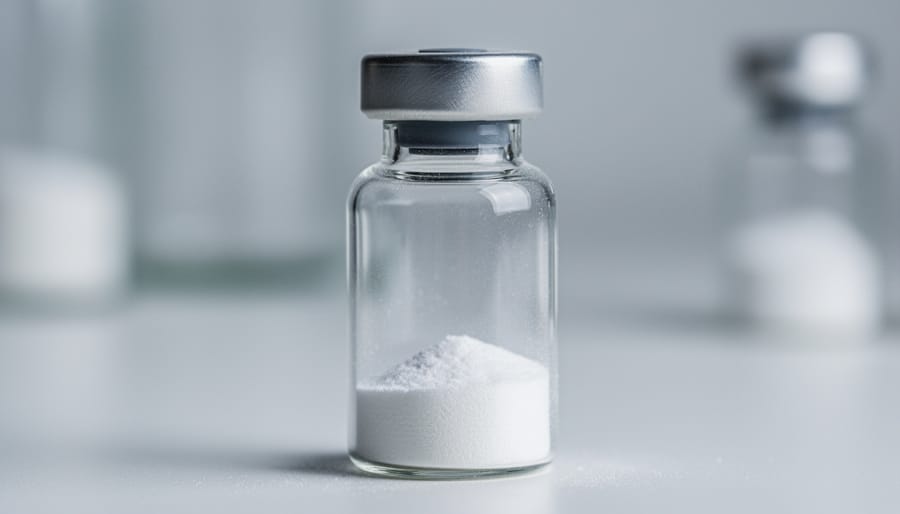
What Quality Vial Packaging Looks Like: Materials, Seals and Labels
Reading the Label and Certificate of Analysis
A Certificate of Analysis, or COA, is the document that shows what a testing lab actually found in a specific batch. It’s the closest thing a researcher has to proof that the powder in the vial matches the claim on the label. If you’ve ever checked a lab report before buying a CBD product, you already have the right lab report mindset. The same habits apply here: read it, don’t just glance at it.
A solid COA is specific. For a closer look at what a CoA should include a useful reference is worth keeping handy, but here’s a quick checklist to run through before you trust a batch:
- The batch or lot number on the COA matches the one printed on your vial label.
- A purity percentage is stated, not just a vague “high purity” claim.
- The testing method is named, such as HPLC or mass spectrometry.
- A test date is shown, and it’s recent enough to make sense for the batch.
- The issuing lab is clearly identified, with contact details you can verify.
Who ran the test matters just as much as what it says. A COA from an independent third-party lab carries more weight because that lab has nothing to gain from flattering the numbers. A self-issued report isn’t automatically wrong, but it’s the seller grading their own homework.
Aim for curious, not cynical. Most suppliers aren’t trying to fool you, but a quick cross-check takes minutes. If a detail doesn’t line up, ask for clarification before you use the material.
Who Should Be Paying Attention: Who This Applies To and What Standards Exist
Most people searching this topic fall into one of two camps, and the difference matters. Legitimate research buyers are people working in a structured scientific setting: university labs, institutional research groups, contract research organizations, and qualified researchers with a defined protocol and a procurement process behind them. They’re the ones who need consistent vials, traceable lot numbers, and paperwork they can file.
Who shouldn’t be sourcing these materials? Anyone hoping to use them on themselves or anyone else. Peptides sold for research use carry a “for research purposes only” label for a reason: they aren’t approved for human consumption, and the label isn’t a wink. If you’re coming from the CBD and vaping world like many of us, think of it as the opposite of a consumer product. There’s no dosing guidance and no safety profile written for personal use.
It also helps to know the standards landscape, even loosely. General laboratory quality frameworks, such as good laboratory practice and good manufacturing practice concepts, exist to promote documentation, controlled processes, and traceability. Treat them as context, not a guarantee. A supplier mentioning these ideas doesn’t prove their vials meet any particular bar, so you still verify the batch and paperwork yourself.
If a term trips you up along the way, brushing up on basic research terminology makes labels and lab documents much easier to read with confidence.
Researcher Responsibilities and Rights: Storage, Handling and What to Do With a Damaged Order
Common Questions About Peptide Vial Quality
Here are quick answers to the questions that come up most often. Treat them as general guidance for lab and research-use settings only, since these materials are not for personal use.
Why are peptides shipped as powder?
Freeze-dried (lyophilized) powder is generally more stable than a liquid, because there’s less water around to speed up breakdown. That’s why the dry cake inside the vial matters, and why a sealed, intact vial is your first sign things went well.
Does a cloudy or odd-looking vial always mean a bad batch?
Not always, since appearance can vary a little between batches and fill methods. Still, unexpected changes in color, texture or clarity are worth documenting and raising with the supplier before you use anything.
What does “research use only” mean?
It means the material is intended for laboratory research and has not been approved for human consumption. If you’re not working in a qualified research setting, these products aren’t meant for you.
Should I discard a vial if the seal looks loose?
A loose crimp or poorly seated stopper can let in moisture and air, so it’s best to set that vial aside and not use it. Photograph it, note the lot number and contact the supplier.
A good habit is to treat every delivery the same way: inspect, photograph, record the lot number and store it properly before doing anything else. If you want a refresher on what to look for at the door, our guide to step-by-step receiving walks through that routine in a calm, practical way.
When in doubt, pause. Taking an extra few minutes to document an odd vial is far cheaper than losing days of work to unreliable material.
Where to Get Help: Suppliers, Labs and Official Resources
When something looks off with a vial, you don’t have to guess your way through it. A few legitimate places can help, and it’s worth knowing the order to try them in. This is all in a research-use-only context, so the goal is documentation and verification, not workarounds.
- Supplier customer service: Send the lot number, clear photos of the vial, seal and label, and a short description of the problem.
- Accredited testing labs: Ask an independent lab to verify identity and purity if the supplier’s certificate of analysis raises questions.
- Institutional compliance or safety officers: Your procurement or compliance office can advise on approved sourcing and how to report a compromised shipment.
- Official regulator websites: Check the government resources for your region for the rules that apply to research materials where you work.
Start with the supplier. A reputable one will want the details and will tell you how it handles replacements, credits or batch investigations. Photograph everything before you open or discard anything, since a clear paper trail makes the conversation faster and fairer for both sides.
If the answer feels thin, go a step further and have the material or its COA checked by an accredited third-party lab. Think of it like how careful CBD shoppers cross-check a lab report instead of taking a label at face value.
Finally, rules change and vary by country and institution, so rely on your own organization’s office and official regulator sites rather than forum posts or hearsay. Those sources stay current in ways an article never can.
Checking peptide packaging comes down to reliability and trust, the same instinct that makes CBD shoppers read lab reports before buying. A quick look when the box arrives tells you a lot, and it takes a couple of minutes.
| Packaging component | What good looks like | Red flag to watch for |
|---|---|---|
| Glass vial | Clear, intact, no chips or scratches | Cracks or cloudy glass |
| Stopper and crimp seal | Snug stopper, tight crimp cap | Loose or cracked crimp |
| Label | Crisp text with a batch or lot number | Smudged print, missing lot number |
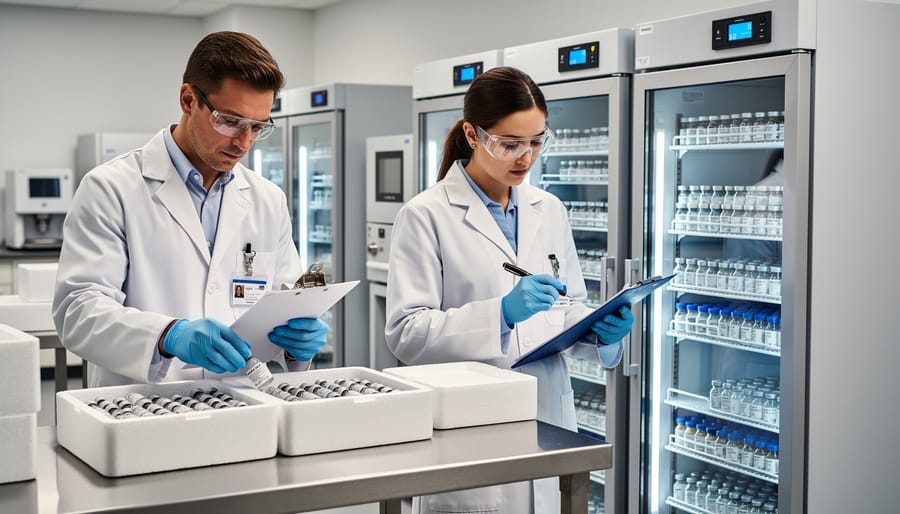
Once everything checks out, keep storage steady: consistent temperature, shielded from light and moisture, with lot numbers recorded and freeze-thaw cycles kept to a minimum. If something looks off, photograph it before opening and contact the supplier.
One last reminder: these materials are for laboratory research use only, not for personal use or human consumption. Stay curious, stay cautious, and let good habits protect your data.